 SPECIAL SCUBA DIVISION← ECHOES OF THE UNDERGROUND

RECORD 06 GERMANY · SAUERLAND · 2026
BERGWERK
NUTTLAR
A labyrinth of slate.
MINE · HISTORY · NAVIGATION · OVERHEAD01 / ECHO
Beneath the hills of the Sauerland lies a world shaped by human hands over generations.
Kilometres of passages, vast extraction chambers and stone walls. Behind them lies a history of hard labour, human lives and one of the dark chapters of the Second World War. Today, water has claimed most of this world. Its story, however, has not disappeared.
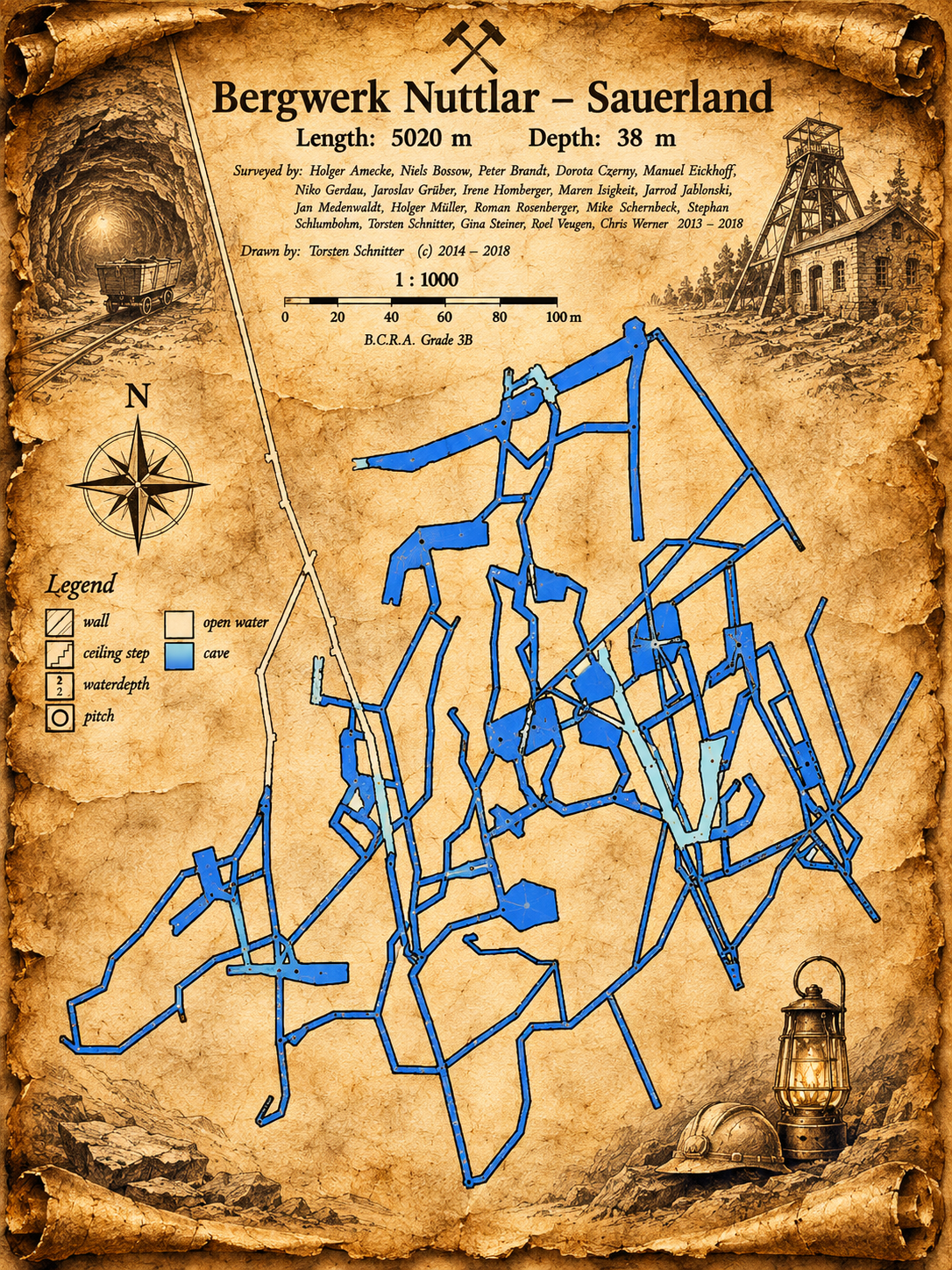
We came here for a brief visit. In front of us lay a map showing more than five kilometres of surveyed routes — an intricate network of junctions, circuits, shafts and depth levels. At first glance, it was clear that Nuttlar would not be a simple dive site.
02 / BENEATH THE SAUERLAND HILLS
When the mountain
provided a living.
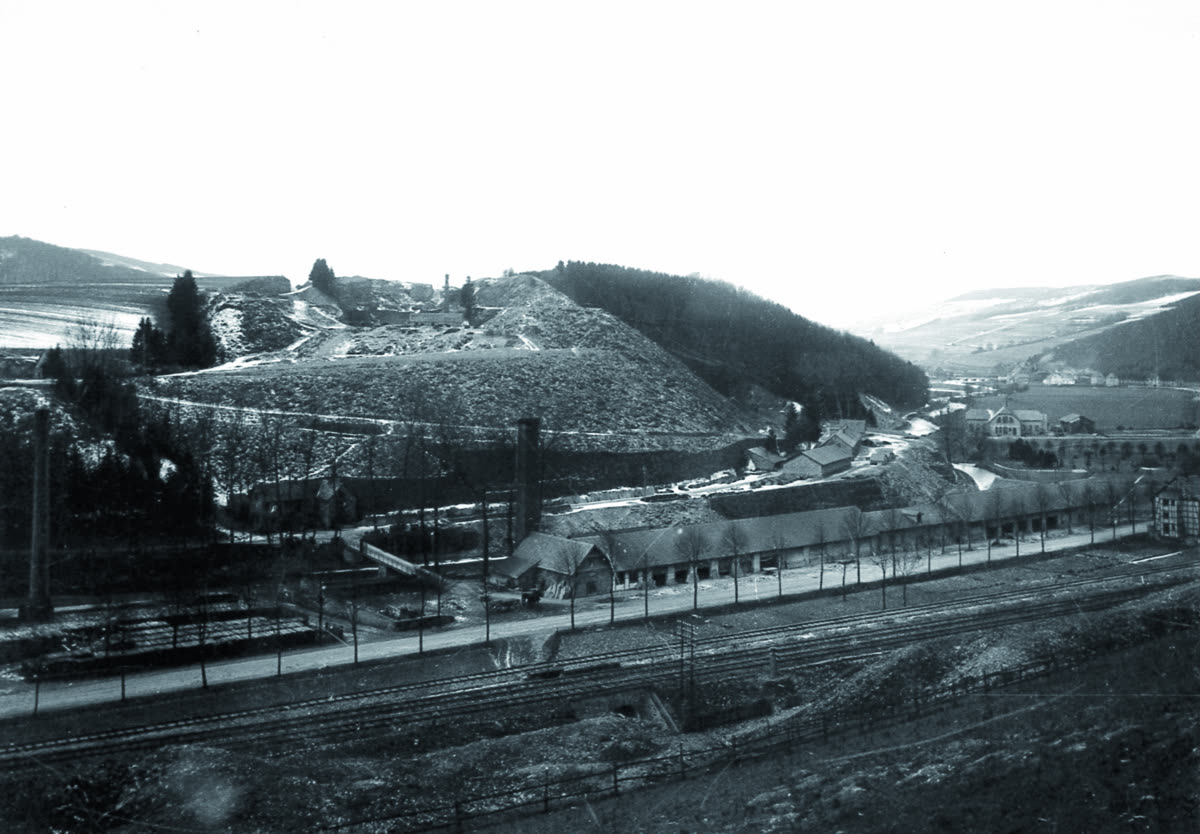
Once, the blows of mining tools, the clatter of mine carts and the voices of men descending underground day after day echoed here. Every metre of this labyrinth had a purpose. Each new passage meant more rock extracted, more hours of strenuous work and another step into the heart of the mountain.
Slate had been mined in the Ruhr valley since at least the beginning of the eighteenth century. The rock could be split into thin, durable slabs and was used mainly for roofing. In the harsh Sauerland climate, it protected houses, farm buildings and churches from rain and snow.
At first, the stone was extracted from small surface quarries. The work was largely manual and demanded considerable experience. Not every layer was suitable, and splitting the stone correctly was a craft passed down through generations.
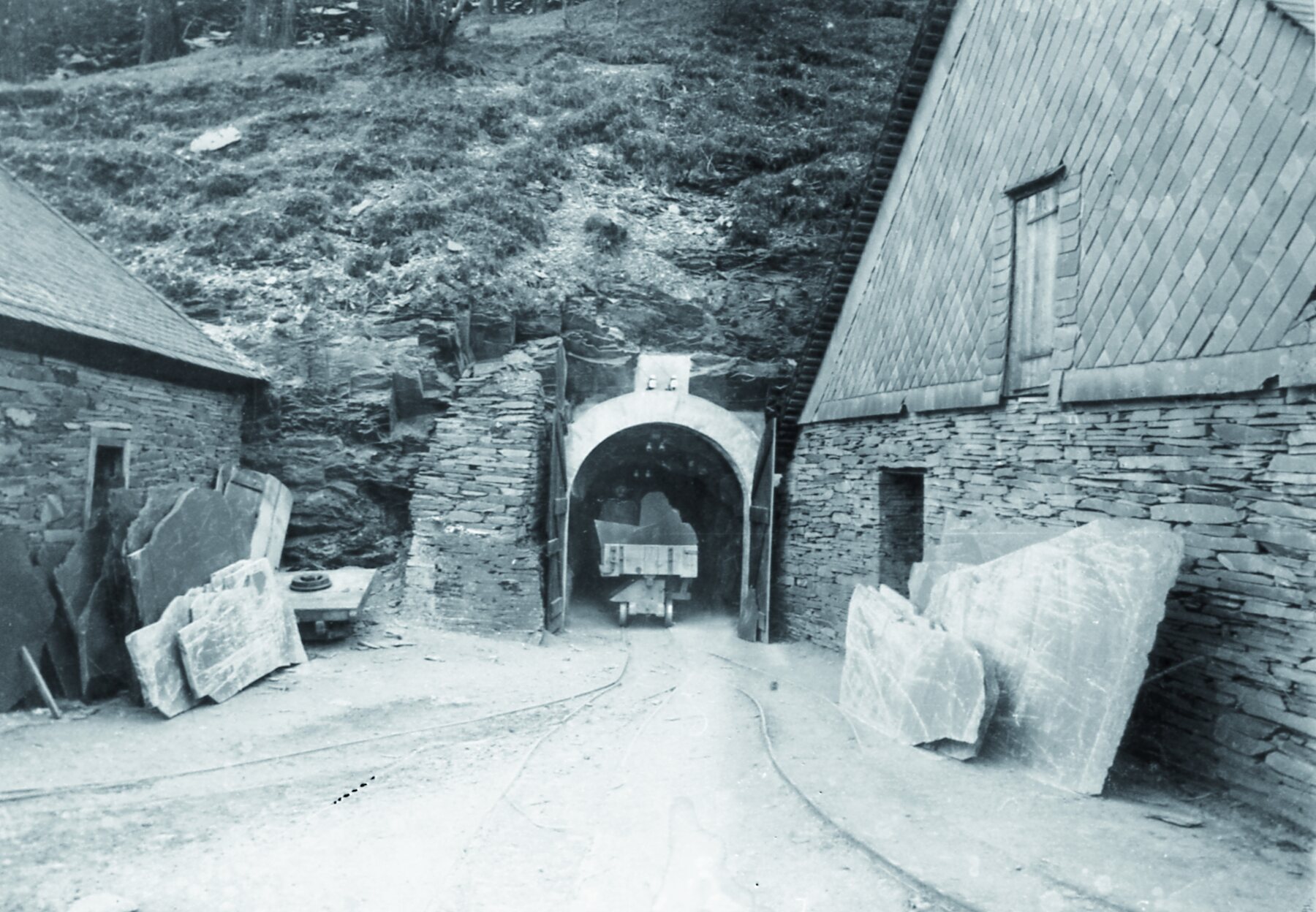
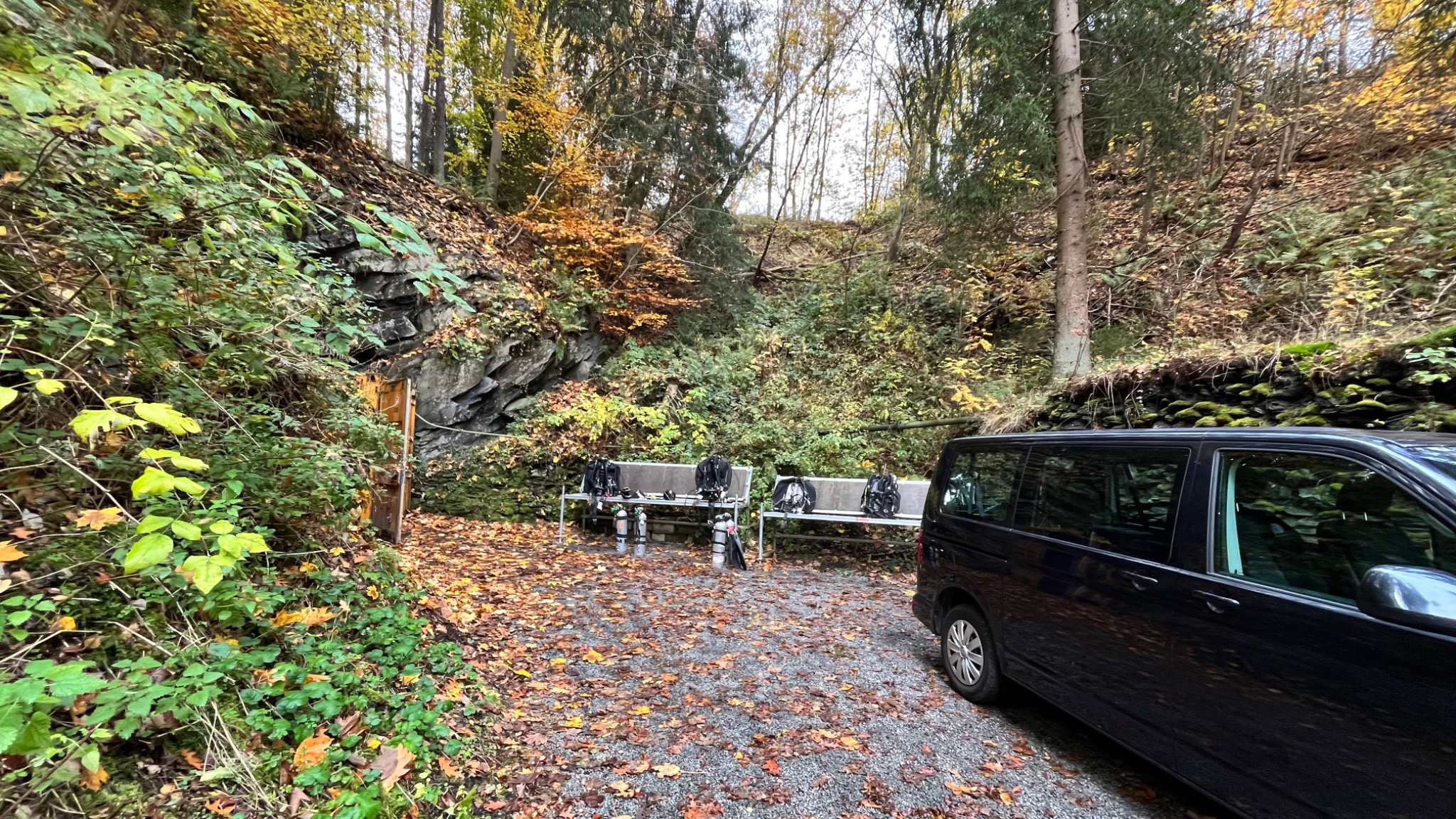
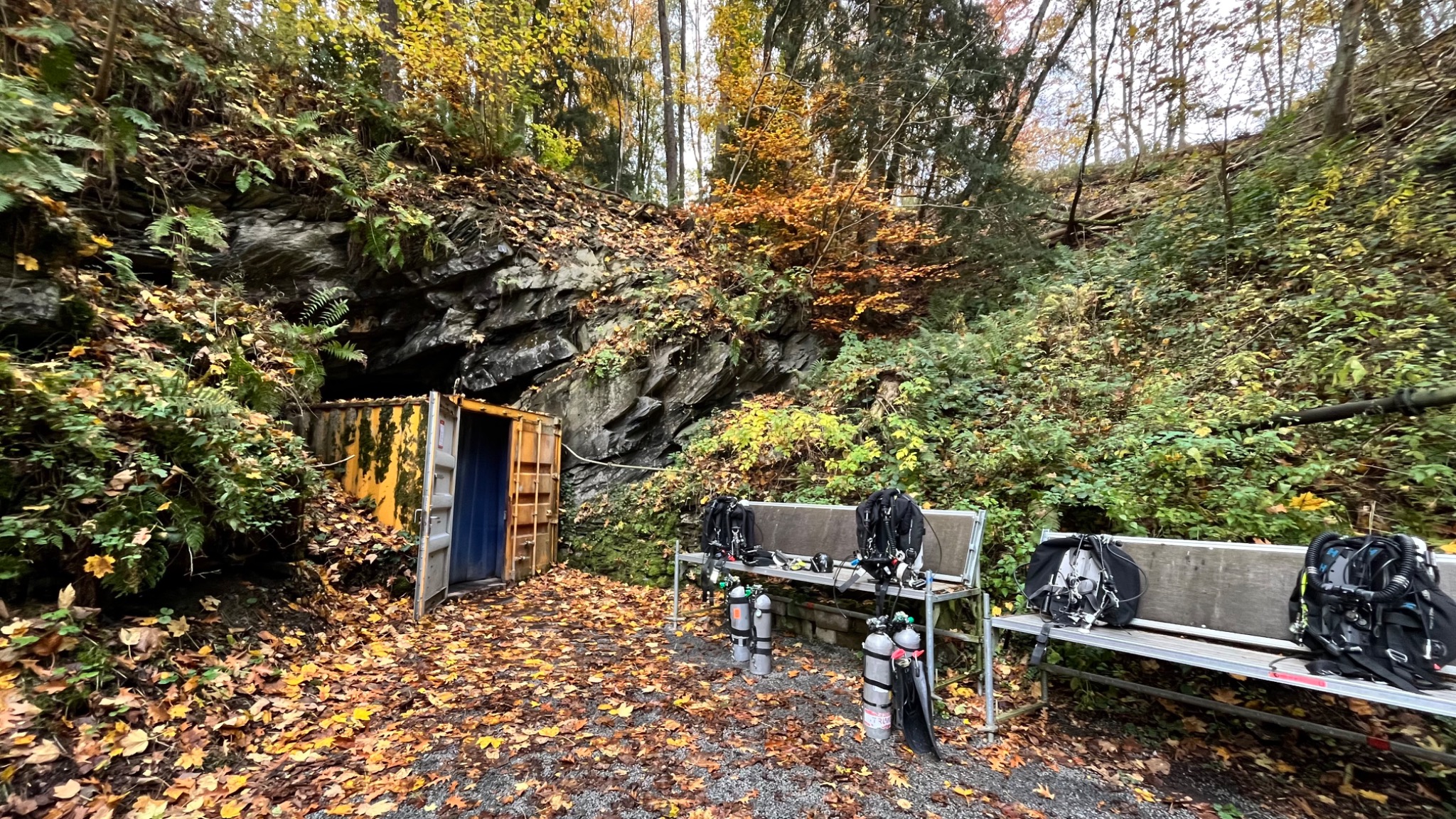
The adit entrance connected the world above ground with a labyrinth that gradually expanded inside the mountain.
FROM STONE TO ROOF
The craft began
with choosing the rock.
Good slate had to be separated from layers unsuitable for further processing. The experience of miners and surface workers determined whether an extracted block would become thin, durable roofing slates.
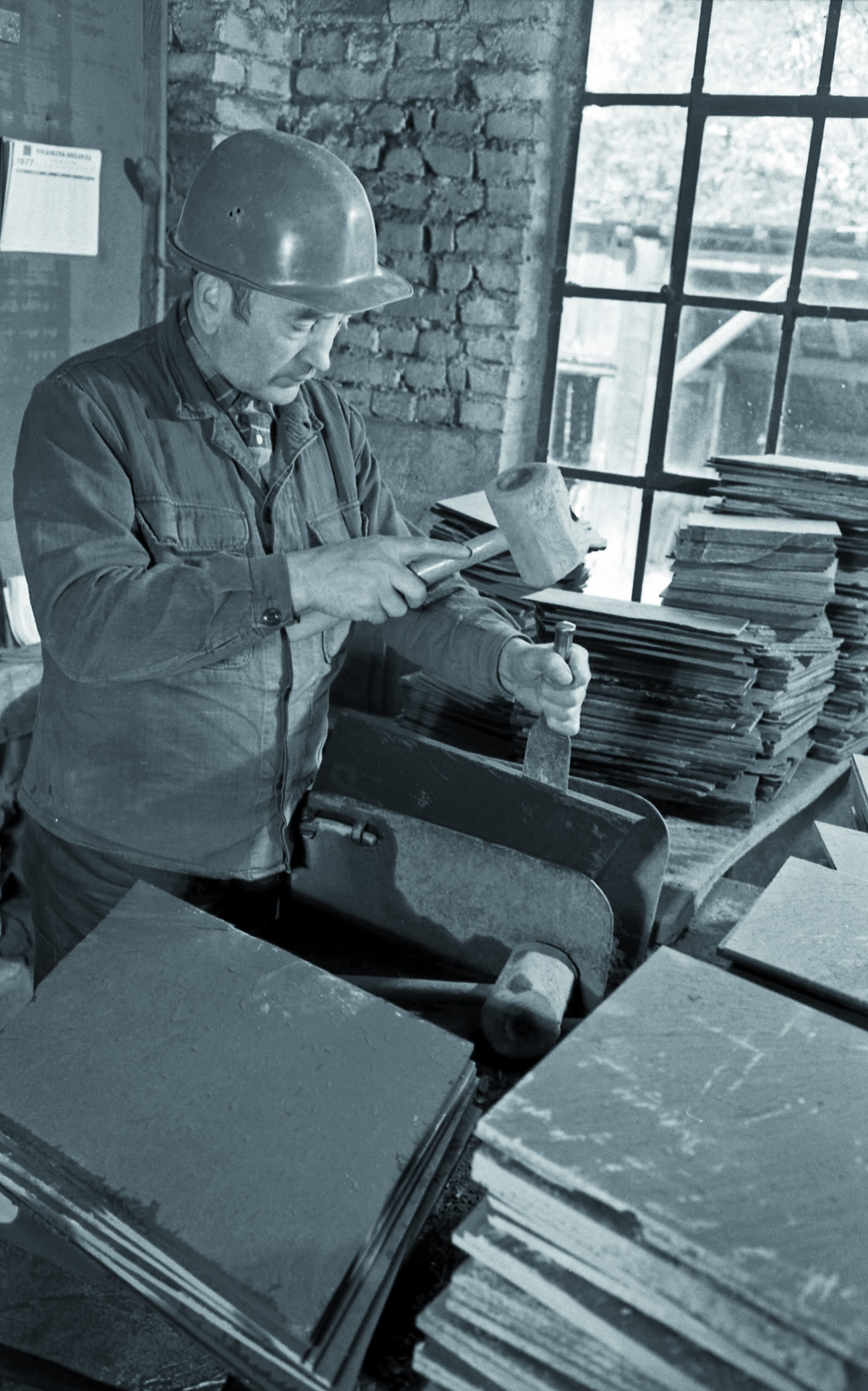
Every piece passed through several hands. Extraction was followed by sorting, hand splitting, trimming and finishing. Only then could the material leave Nuttlar for roofs across the Sauerland and far beyond.
03 / FROM THE ARCHIVE
FROM CRAFT TO INDUSTRY
History preserved
on paper.
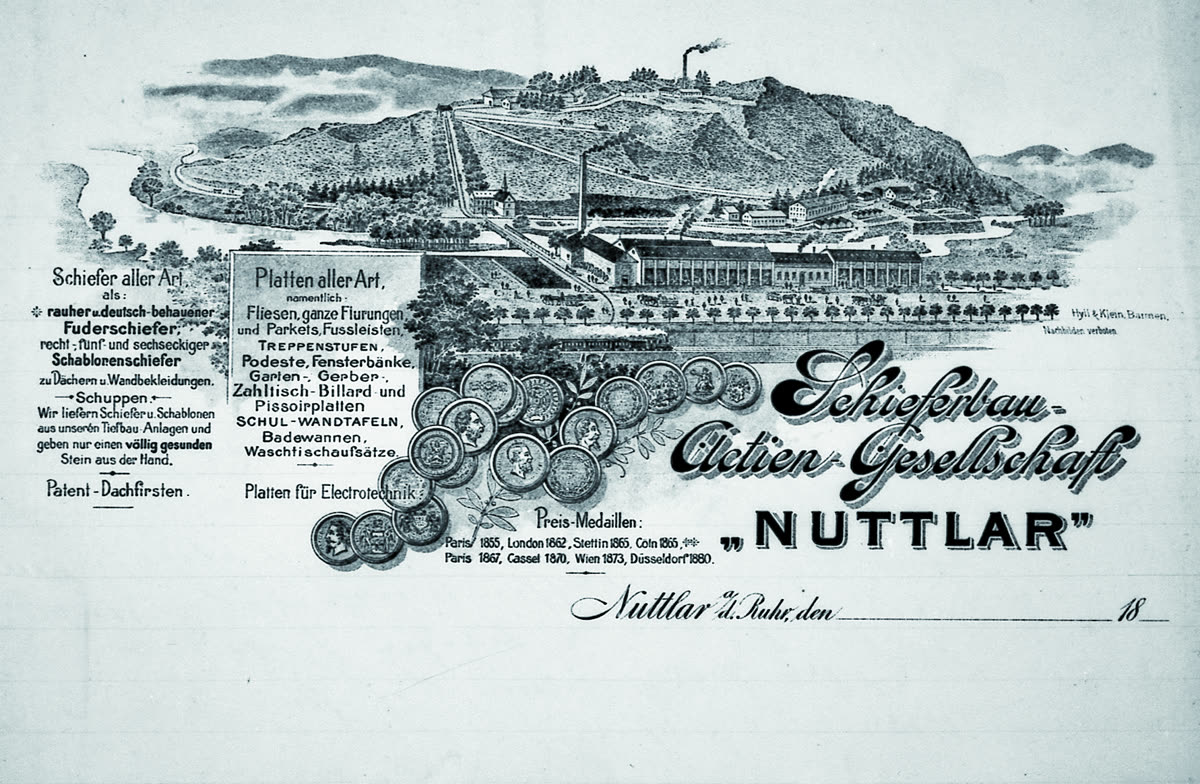
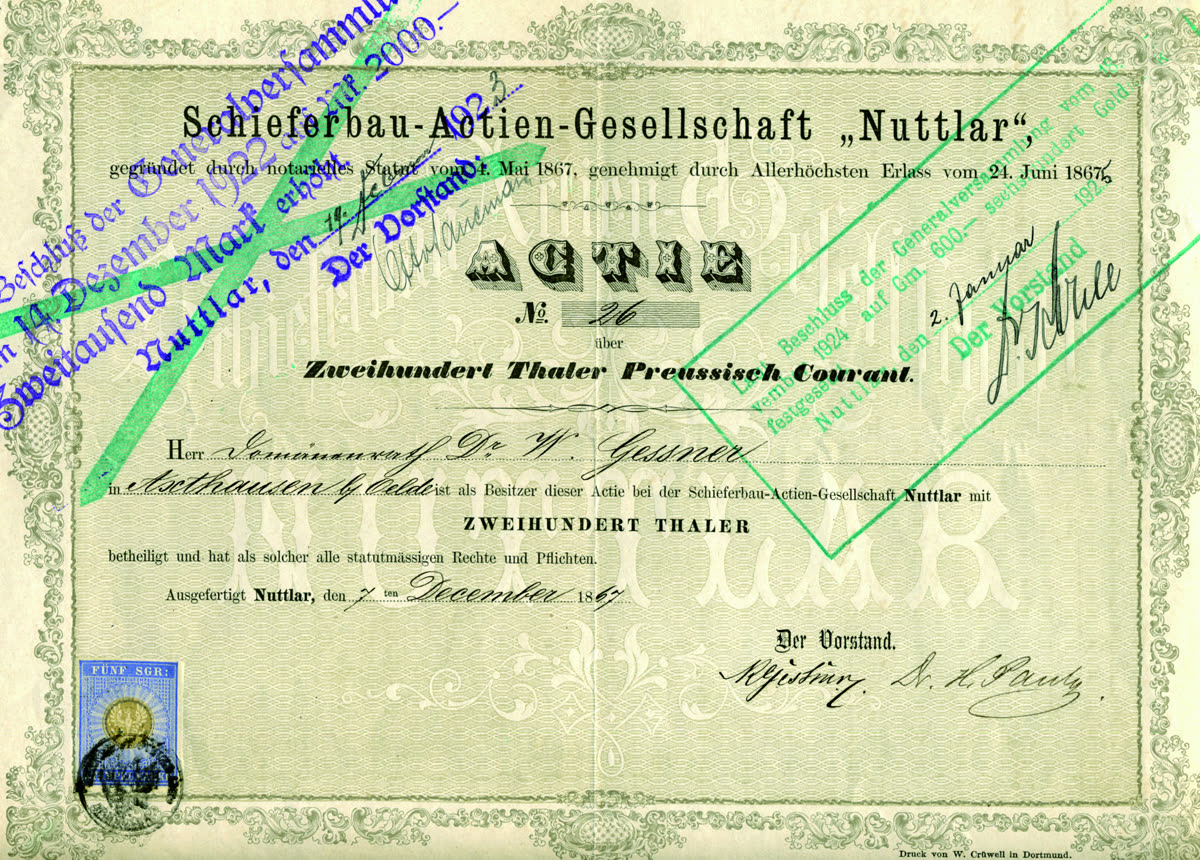
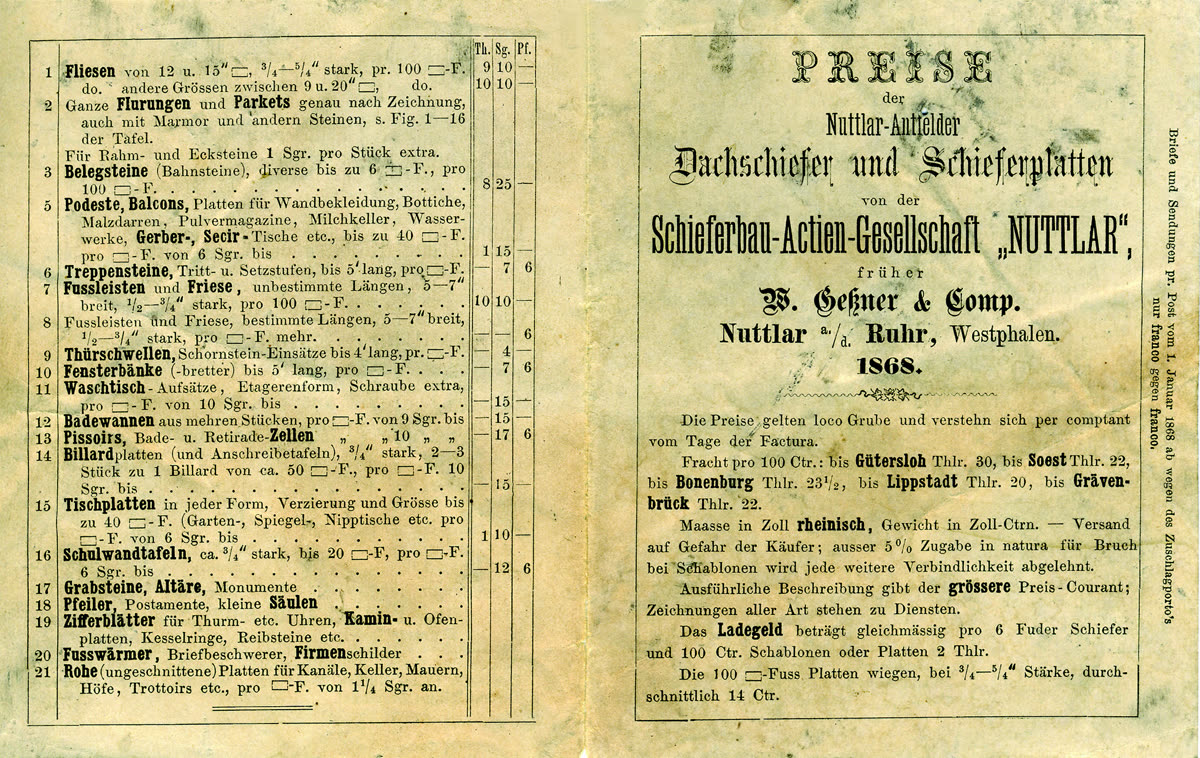
W. Geßner & Co. was founded in 1857 and began consolidating the local mining operations. Ten years later, it was transformed into the Schieferbau-Actien-Gesellschaft Nuttlar joint-stock company.
The arrival of the railway in 1873 opened new transport opportunities. Stone from Nuttlar could reach more distant markets, and mining became increasingly important to the regional economy.
04 / INTO THE HEART OF THE MOUNTAIN
107 YEARS OF UNDERGROUND WORK
The passages followed
the finest slate.
On 26 April 1878, the decision was made to begin driving the Kaiser Wilhelm adit. Mining gradually moved from the surface deep into the mountain. The main adit was completed in 1892, and the underground system continued to grow.
Five mining levels were created, connected by passages and inclined haulage routes known as Bremsberge. They enabled extracted material to be moved between the individual levels.
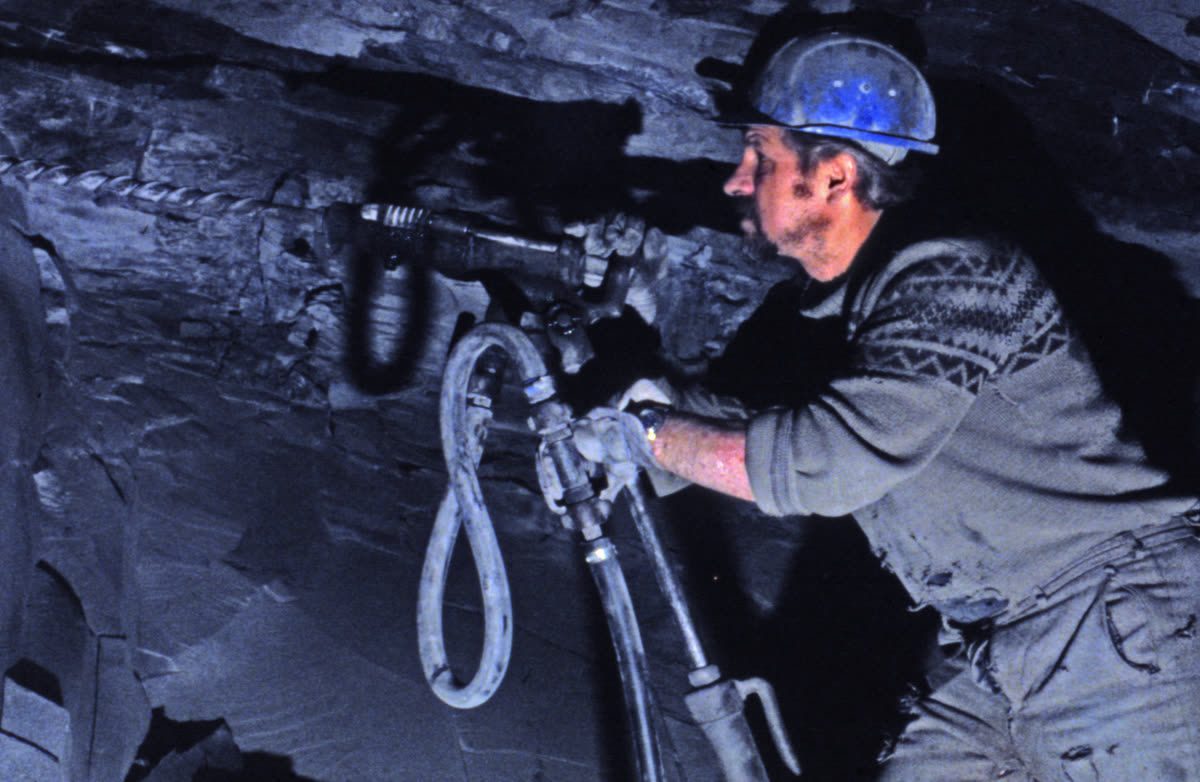
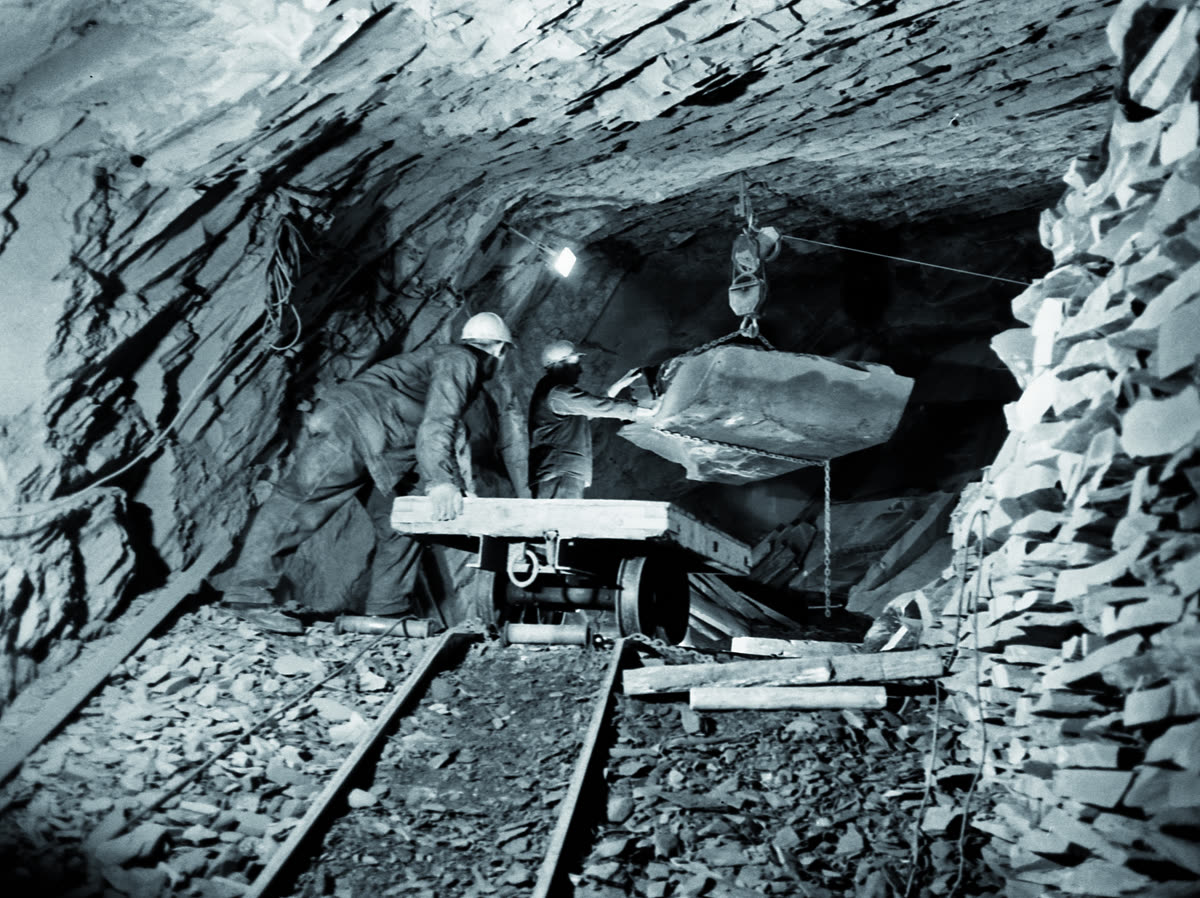
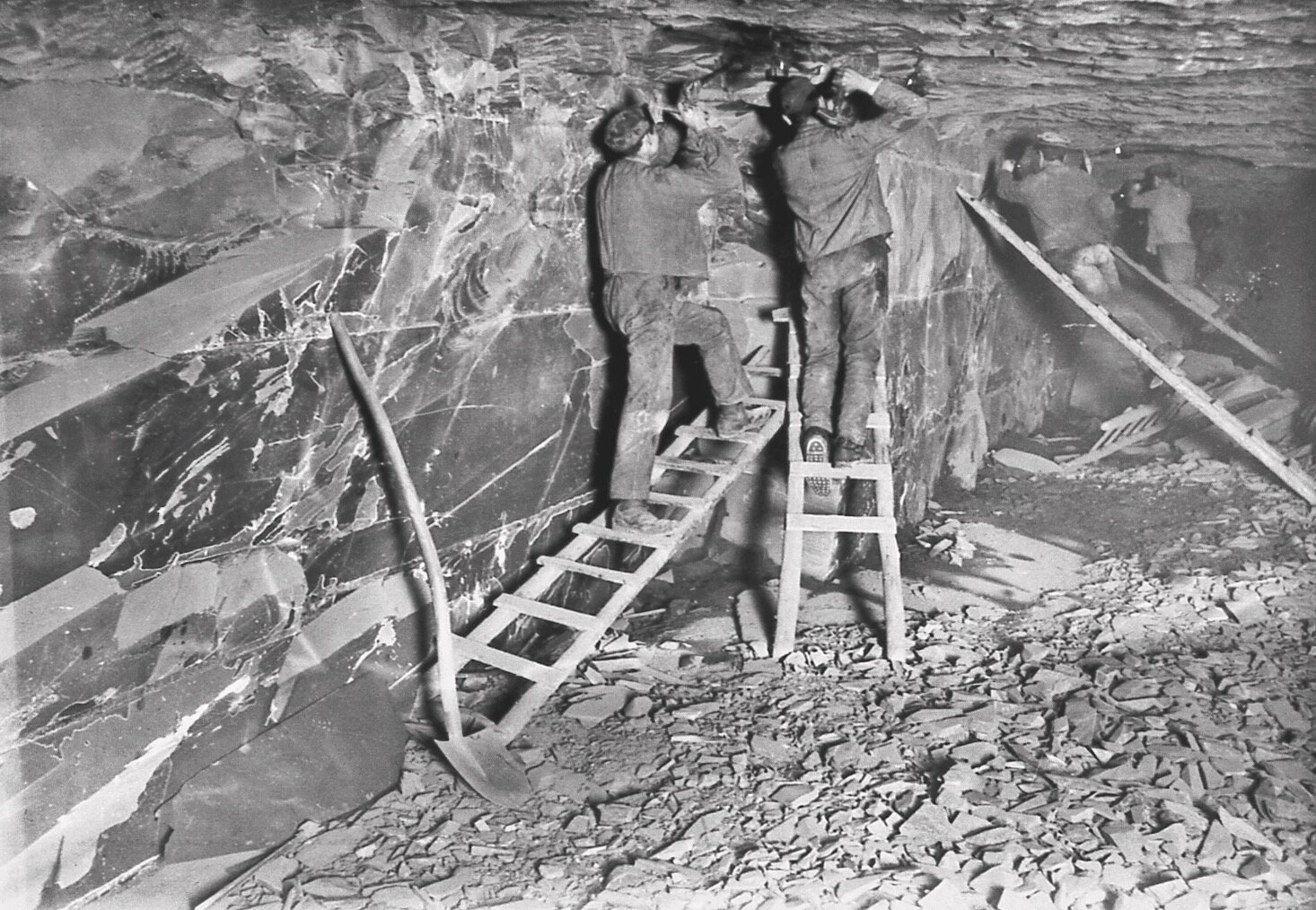
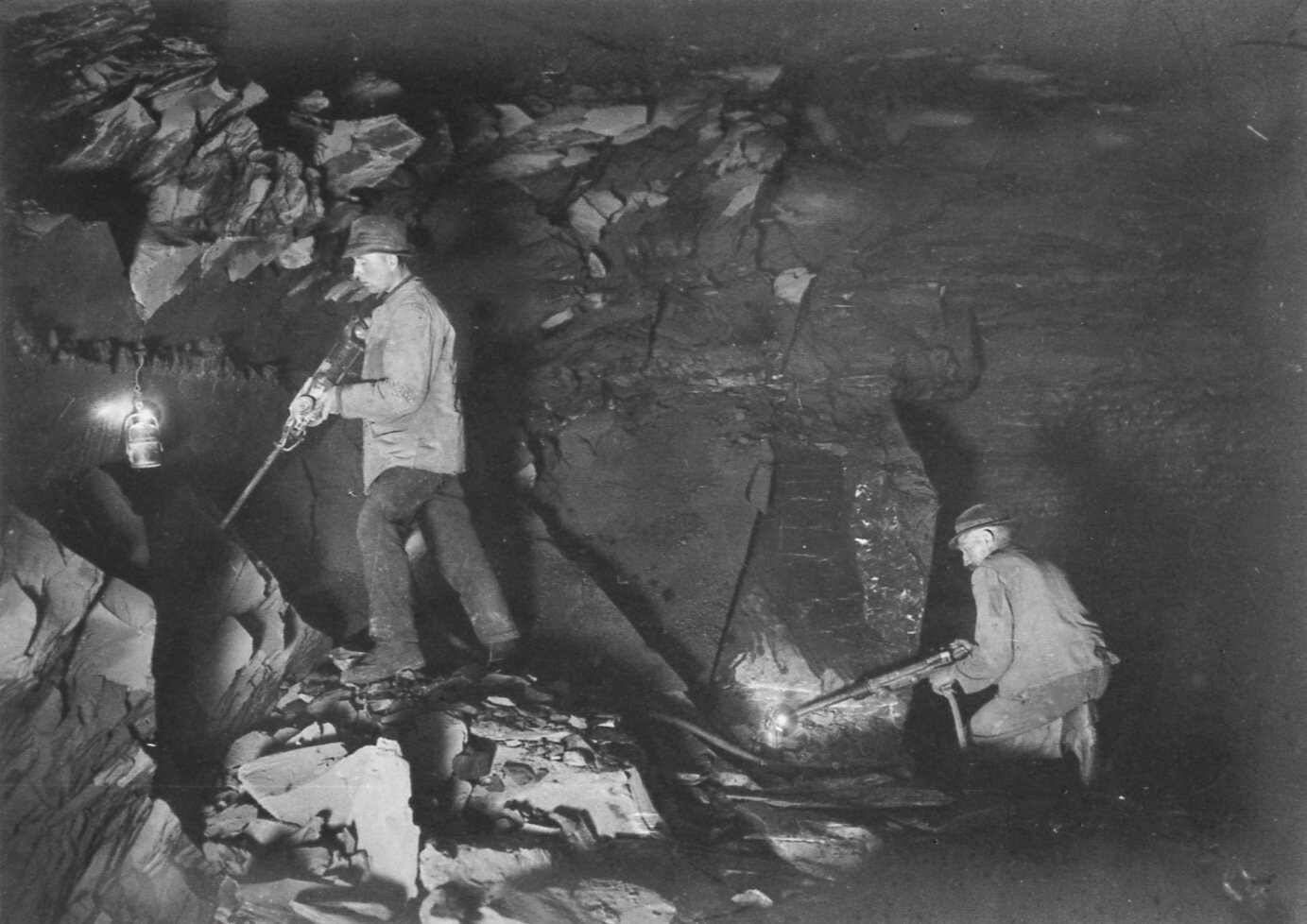
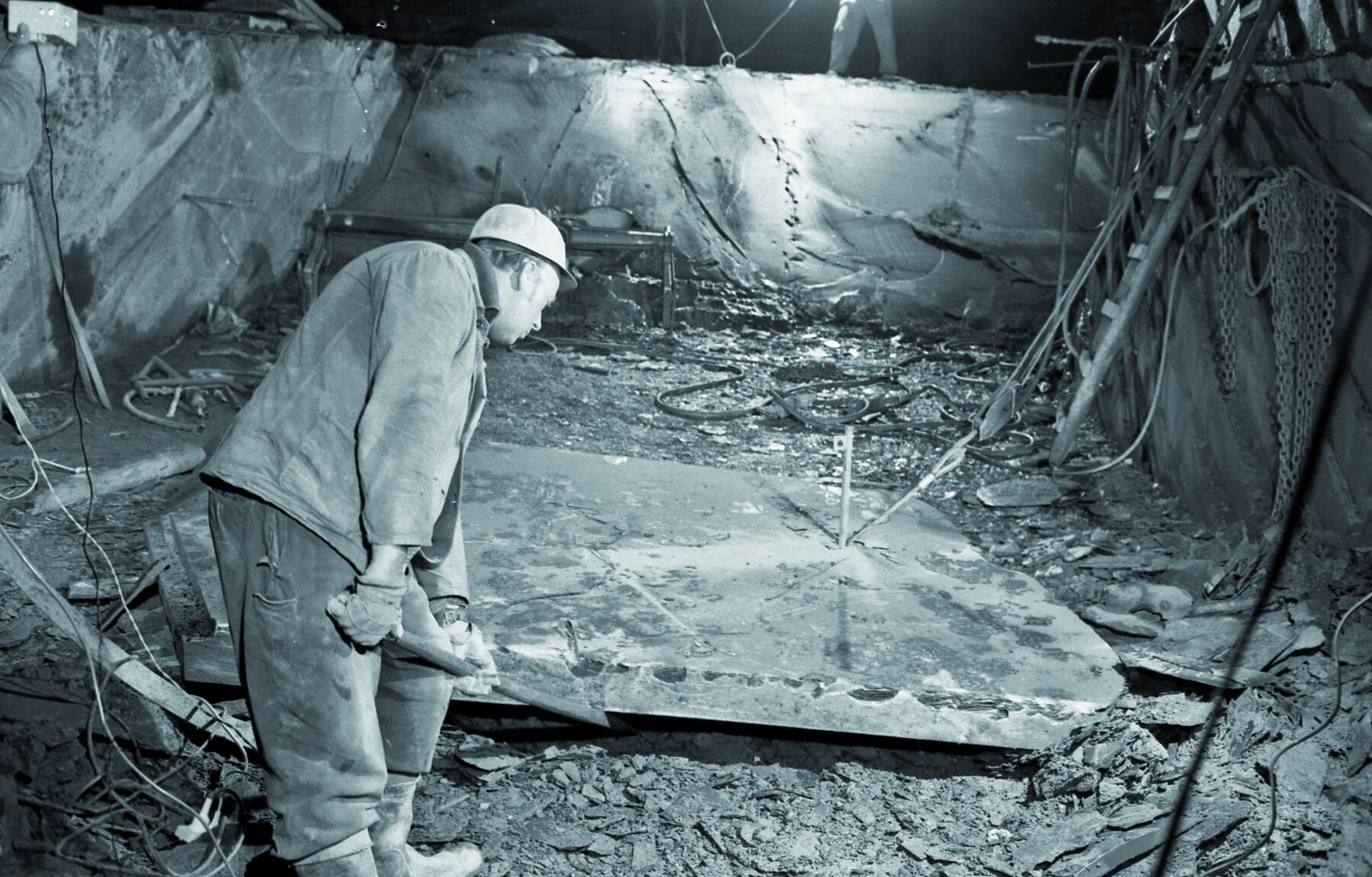
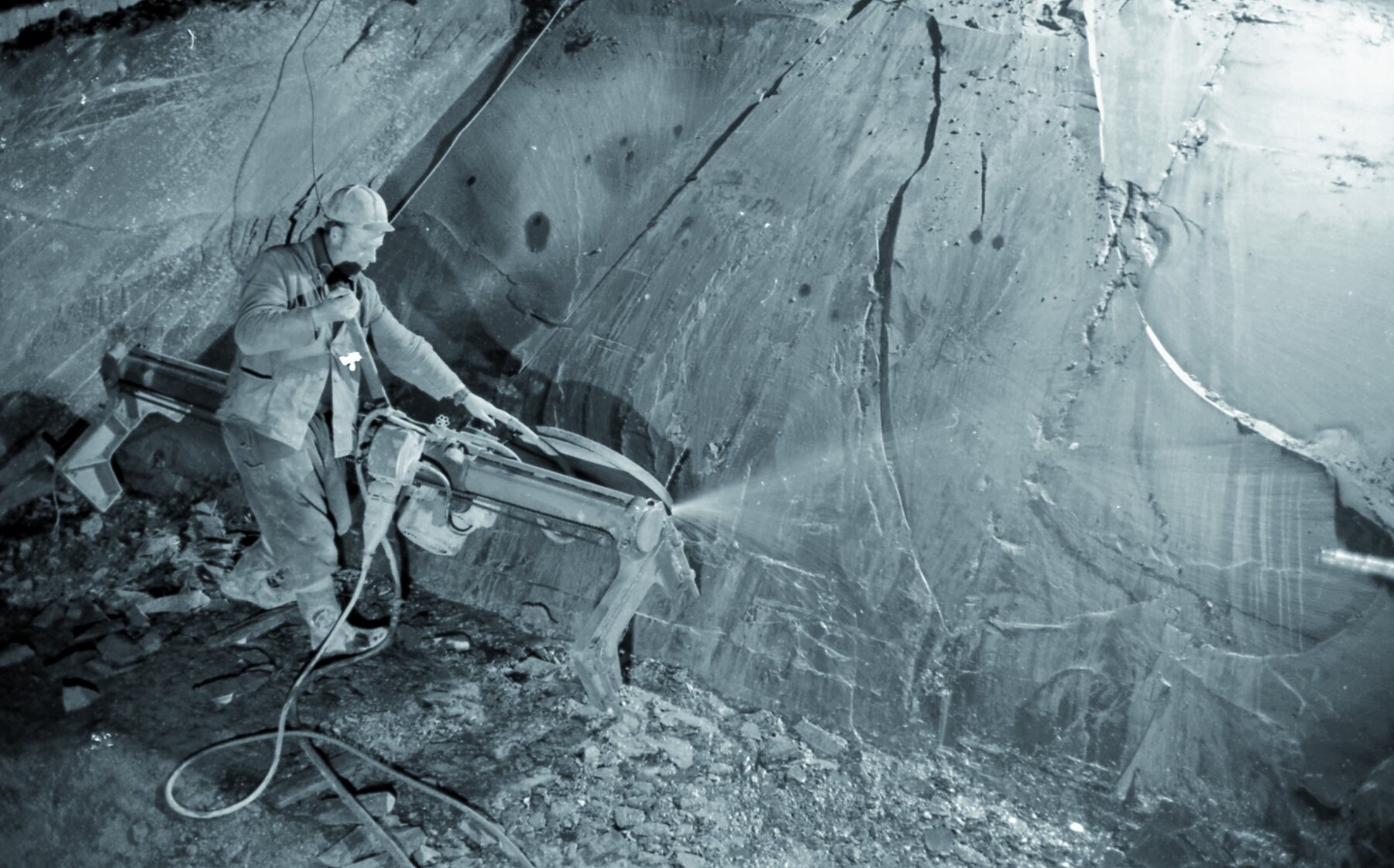
Work advanced layer by layer. The miners first drilled and released the slate from the rock mass. They then loaded it into mine carts and transported it through the network of passages towards the surface.
A modern visitor might look for a hidden plan in the mine's complexity. In reality, its shape was determined mainly by the location of high-quality deposits. The passages followed the slate and gradually formed a labyrinth some twenty to twenty-four kilometres long.
The first surviving written reference to slate mining around Nuttlar.
W. Geßner & Co. is founded and consolidates local operations.
The railway opens access to more distant markets.
Driving the Kaiser Wilhelm adit begins.
The main adit is completed; the underground system continues to expand.
Passages and inclined haulage routes — Bremsberge — connect the individual levels.
The last mining shift enters the mine.
Operations end permanently and the pumps stop.
The water slowly rises to its present level.
WORK INSIDE THE MOUNTAIN
Period photographs reveal the scale of the underground workplaces and how miners released the slate and prepared it for transport.
05 / THE LAST SHIFT
WHEN THE PUMPS STOPPED
The machines fell silent.
The water returned.
After the Second World War, mining experienced another period of demand. Destroyed towns needed building materials and new roofs. Economic conditions, however, were changing. Competition from other roofing materials, high operating costs and the demands of underground mining gradually reduced profitability.
At the end of 1984, the last miners left the mine. Operations ended permanently in 1985. The machinery fell silent, the mine carts stopped, and the pumps that had carried water to the Ruhr for decades were switched off.
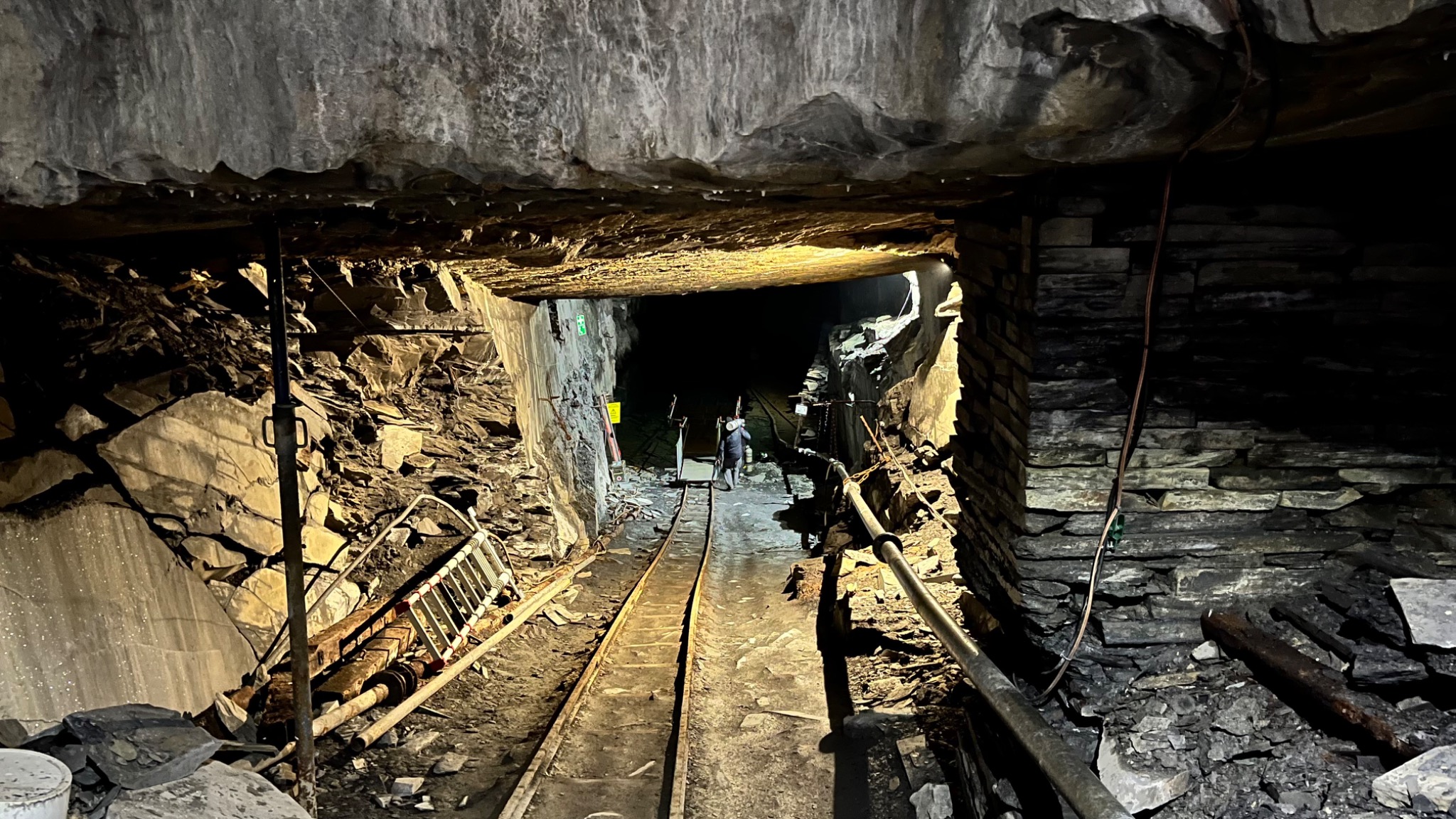
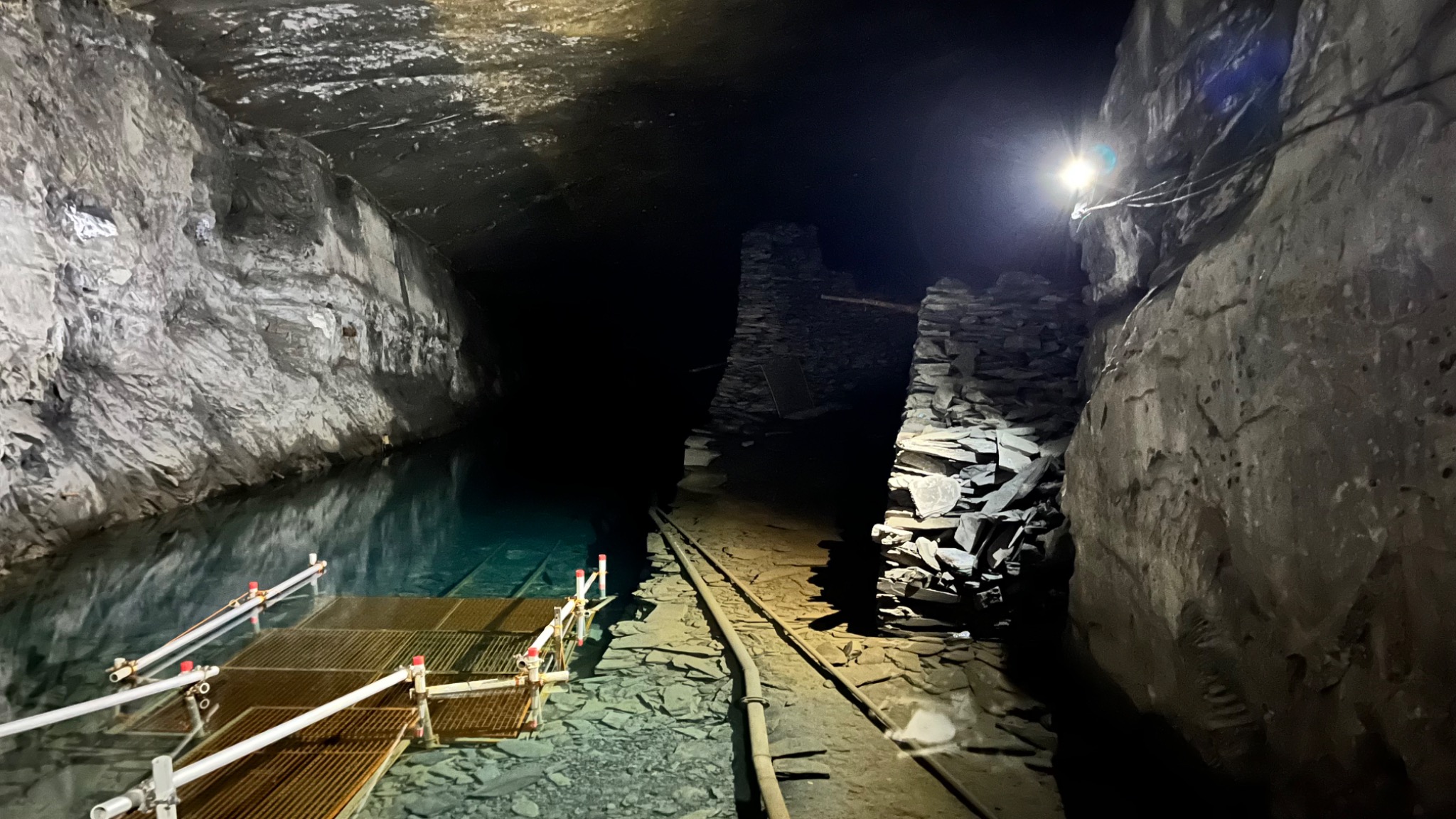
Water first flooded the lowest levels and then slowly rose through the remaining passages. It took more than seven years to reach today's level. Rails, carts, tools and other traces of daily work remained below. Nuttlar became an underground time capsule.
06 / BEFORE DAYLIGHT FADES
A brief visit to
the miners' world.
Today, people return to some of Nuttlar's flooded areas. They do not come to mine slate. They come to glimpse places that once belonged to the miners.
Since 2013, the mine has been open to qualified mine and cave divers. We came only for a brief visit.
In front of us lay a map showing more than five kilometres of surveyed passages — an intricate network of junctions, connected circuits, shafts and depth levels. At first glance, it was clear that Nuttlar would not be a simple dive site.
07 / MAP, NAVIGATION AND THE WAY BACK
The dive began
long before the water.
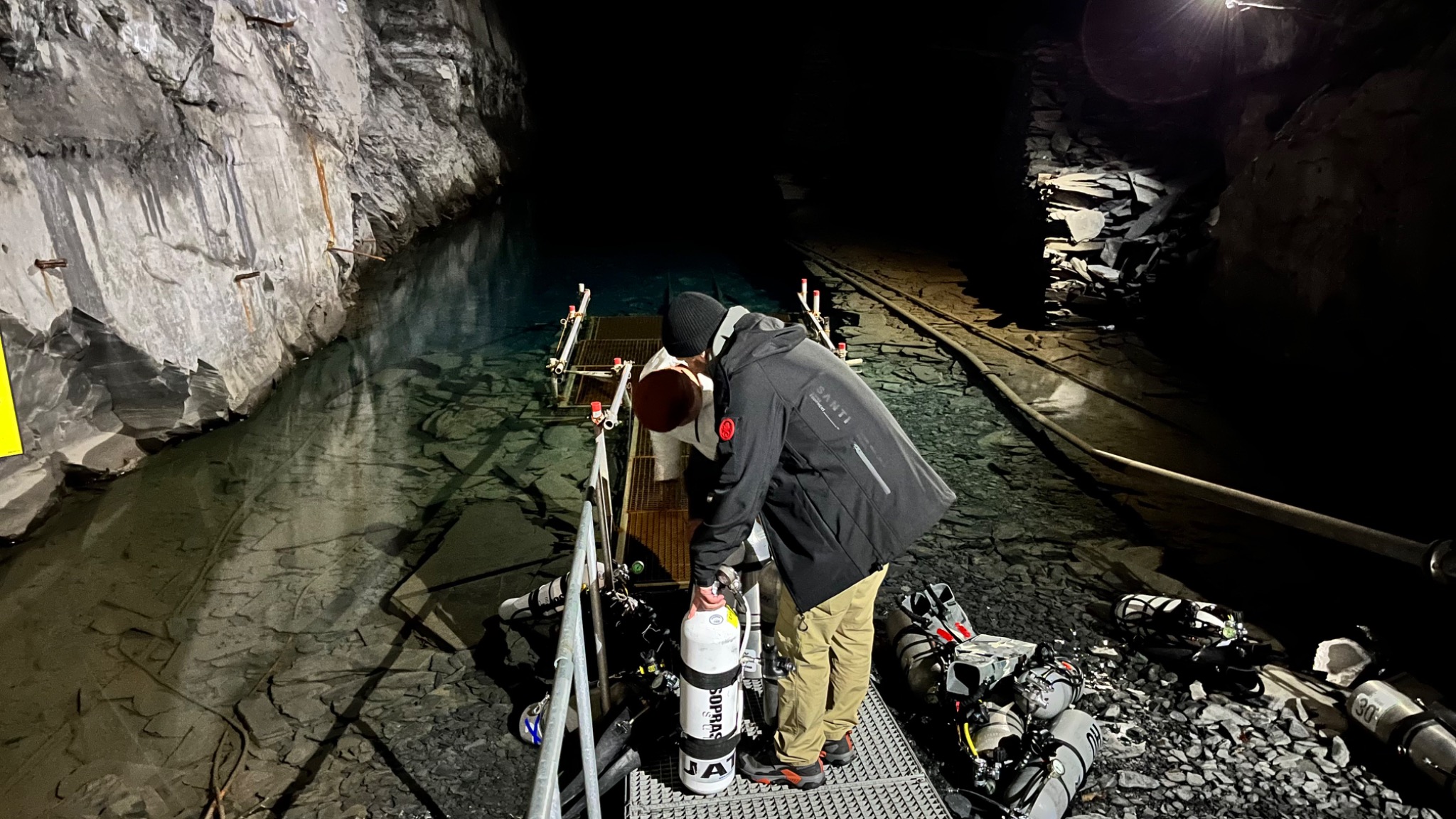
First comes studying the map, choosing the route, defining the depth profile and setting the limits. Nuttlar has a system of permanent guidelines, but the individual circuits are not always connected. Moving between them therefore requires a personal guideline — a jump. An unbroken connection to the guideline leading to the exit must be maintained at all times.
This is not about memorising a few turns, but about preserving a safe and unambiguous route back. In an overhead environment, navigation is one of the fundamental safety systems.
08 / BREATHING GAS · PLAN A · PLAN B
NAVIGATION · GAS · AN UNAMBIGUOUS WAY BACK
Preparation includes
the moment plans change.
For our dives, we chose back-mounted doubles with an additional stage cylinder. Starting pressure was 200 bar. The plan had to cover penetration, return and a reserve for emergencies — including sharing gas with a teammate.
Pressure alone says nothing about the total usable gas supply. Cylinder volume, gas mix and pre-set consumption limits are equally important.
Plan A defined the intended route. Plan B provided a pre-considered alternative if actual conditions made the original plan impossible. Beyond that, clearly defined situations require the dive to be ended and the team to return to the exit.
09 / WHEN LIGHT IS NO LONGER ENOUGH
From crystal-clear water
to only a few centimetres.
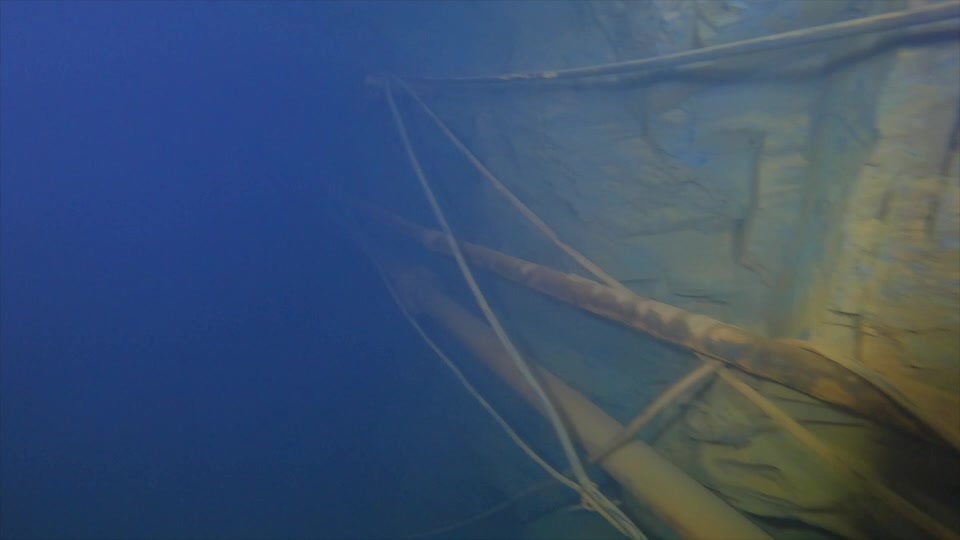
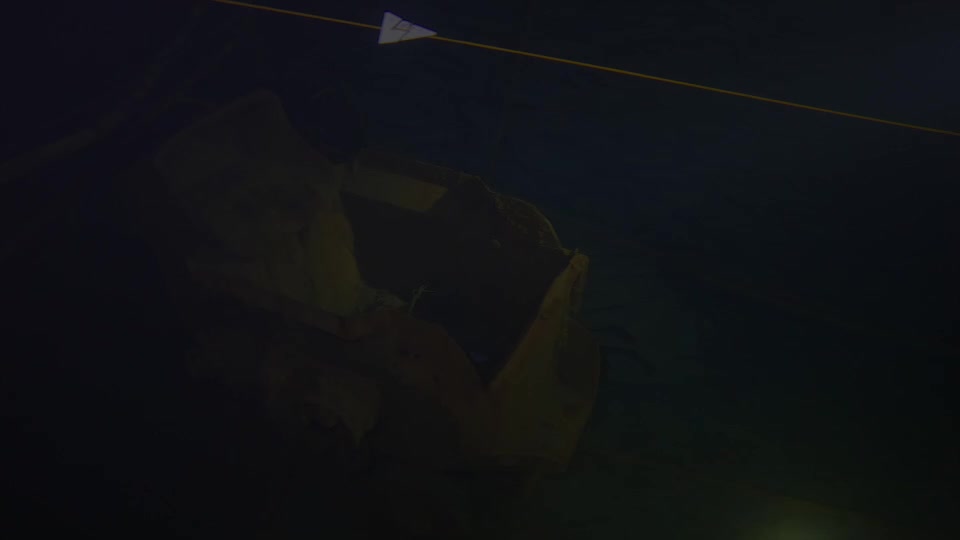
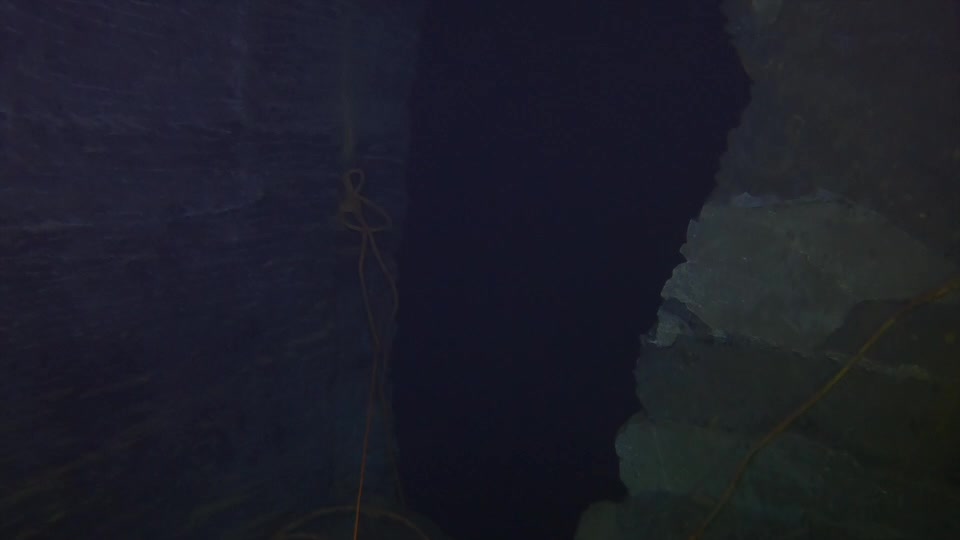
Visibility varied dramatically during our dives. In some areas, the water was so clear that we could see almost everywhere our lights reached. Their beams revealed long passages, connections and traces of former mining activity. Elsewhere, visibility dropped to just two metres.
The greatest change came at the shaft leading to deeper parts of the mine. The water was so turbid that we could see only a few centimetres ahead. We decided not to continue the descent and switched to our prepared Plan B.
Changing the plan is not a failure. It is part of making sound decisions underwater.
10 / STONE WALLS UNDERGROUND
A labyrinth also shaped
by human hands.
Among the most remarkable records of the miners' work are long walls carefully stacked from pieces of slate. Some reach the ceiling; others end lower down.
Mining produced large quantities of rock unsuitable for further processing. Rather than hauling it to the surface, miners stacked it in the worked-out chambers. Piece by piece, massive stone packs were created, leaving passages for people and transport between them.
Some of today's passages were therefore shaped not only by excavation, but also by the arrangement of waste rock inside vast mining chambers. Every carefully placed slab recalls the hours worked by the people who spent their shifts here.
11 / THOSE WHO CREATED THE LABYRINTH
LIFE UNDERGROUND · CRAFT ABOVE GROUND
Behind every metre
of passage stands a person.
At its peak, the mine employed up to two hundred people. The miners' work was exceptionally demanding. Slate had to be released from the rock, divided into transportable pieces, loaded and brought to the surface.
Underground work brought cold, damp, dust and the constant risk of injury. Miners maintained haulage routes, drove new passages, secured workplaces and removed unwanted rock.
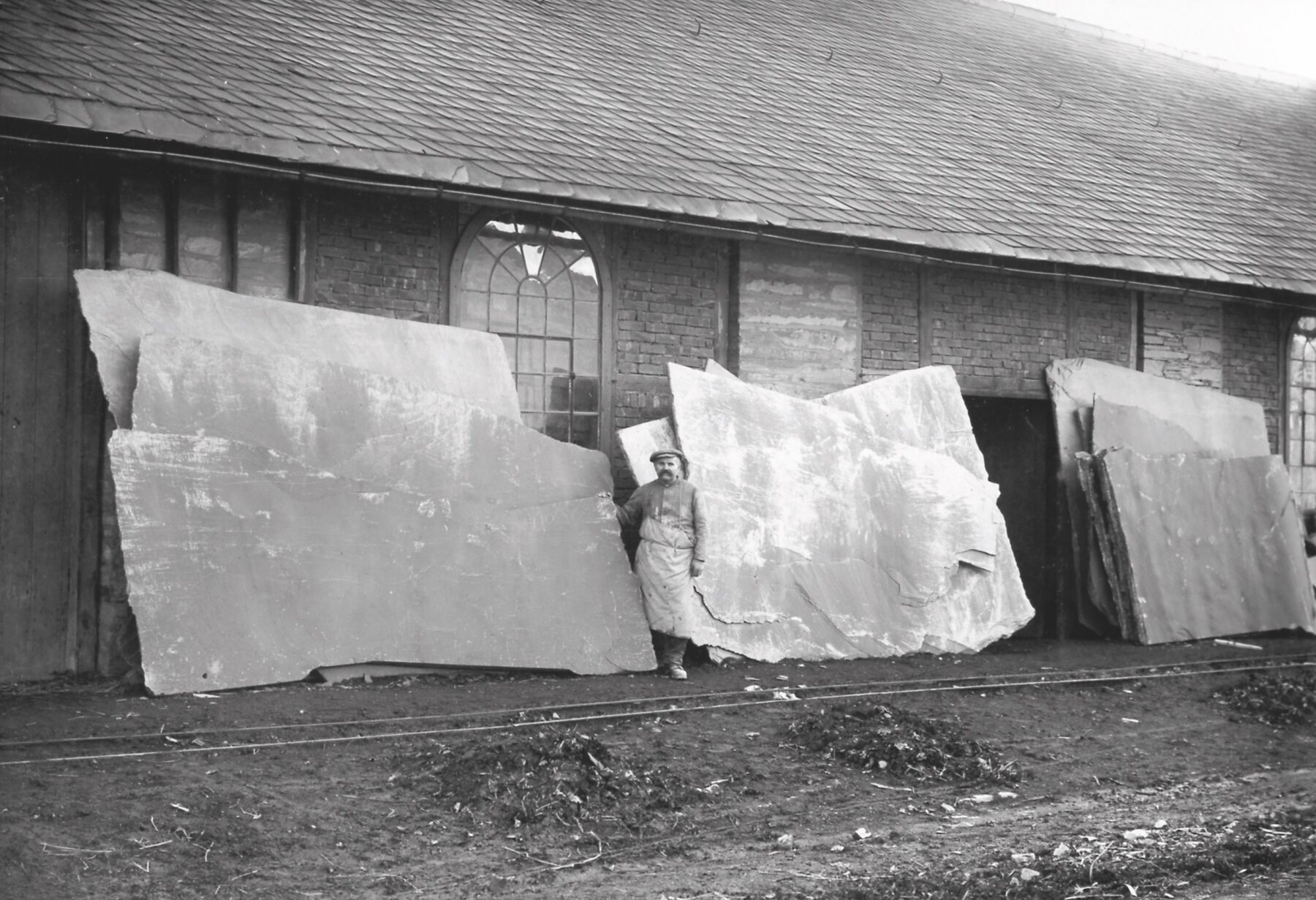
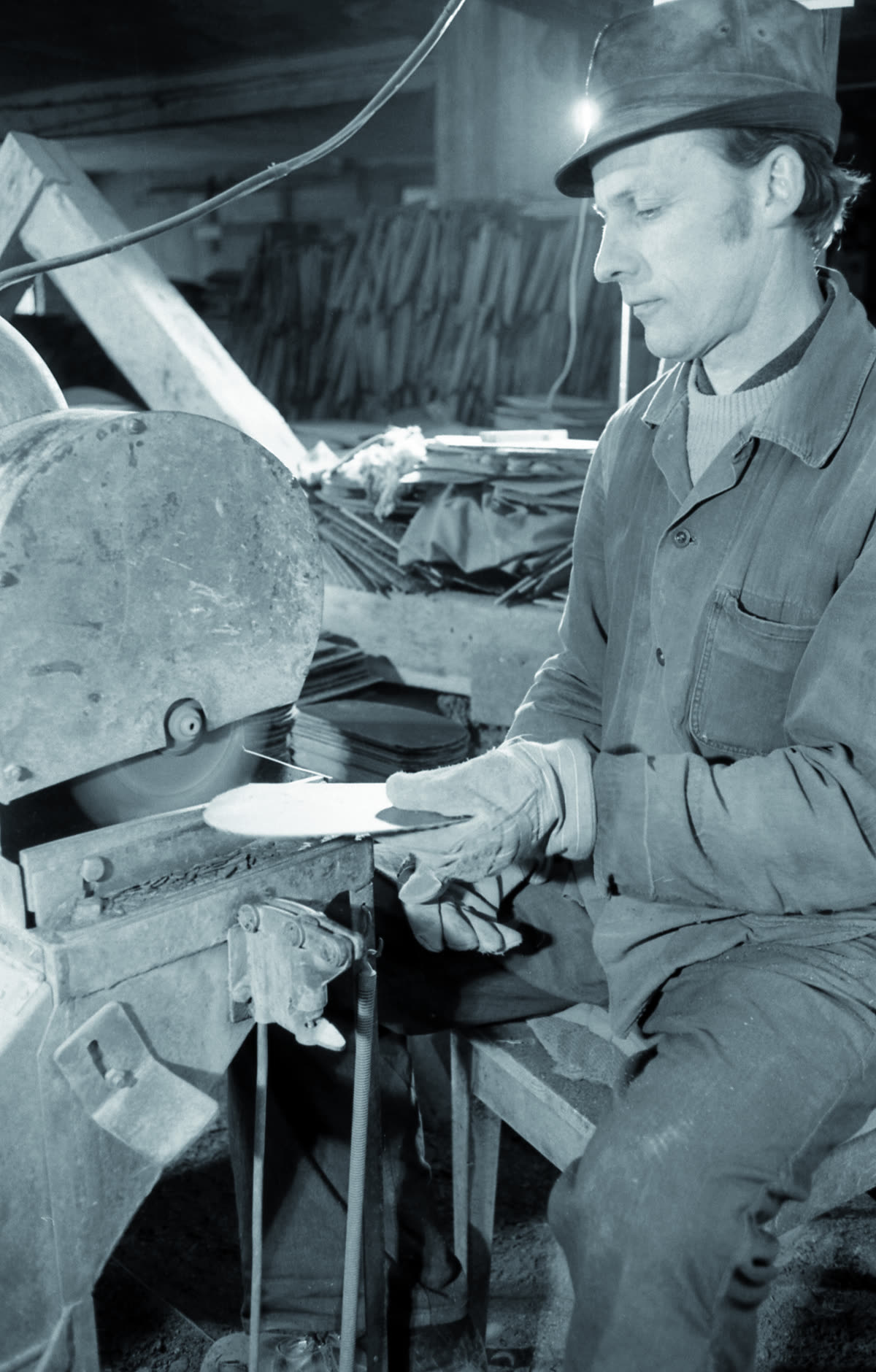
While miners worked underground, others above ground split and shaped the slate into roofing tiles. Mining was more than the occupation of individuals. It formed part of the economic and social life of the entire region.
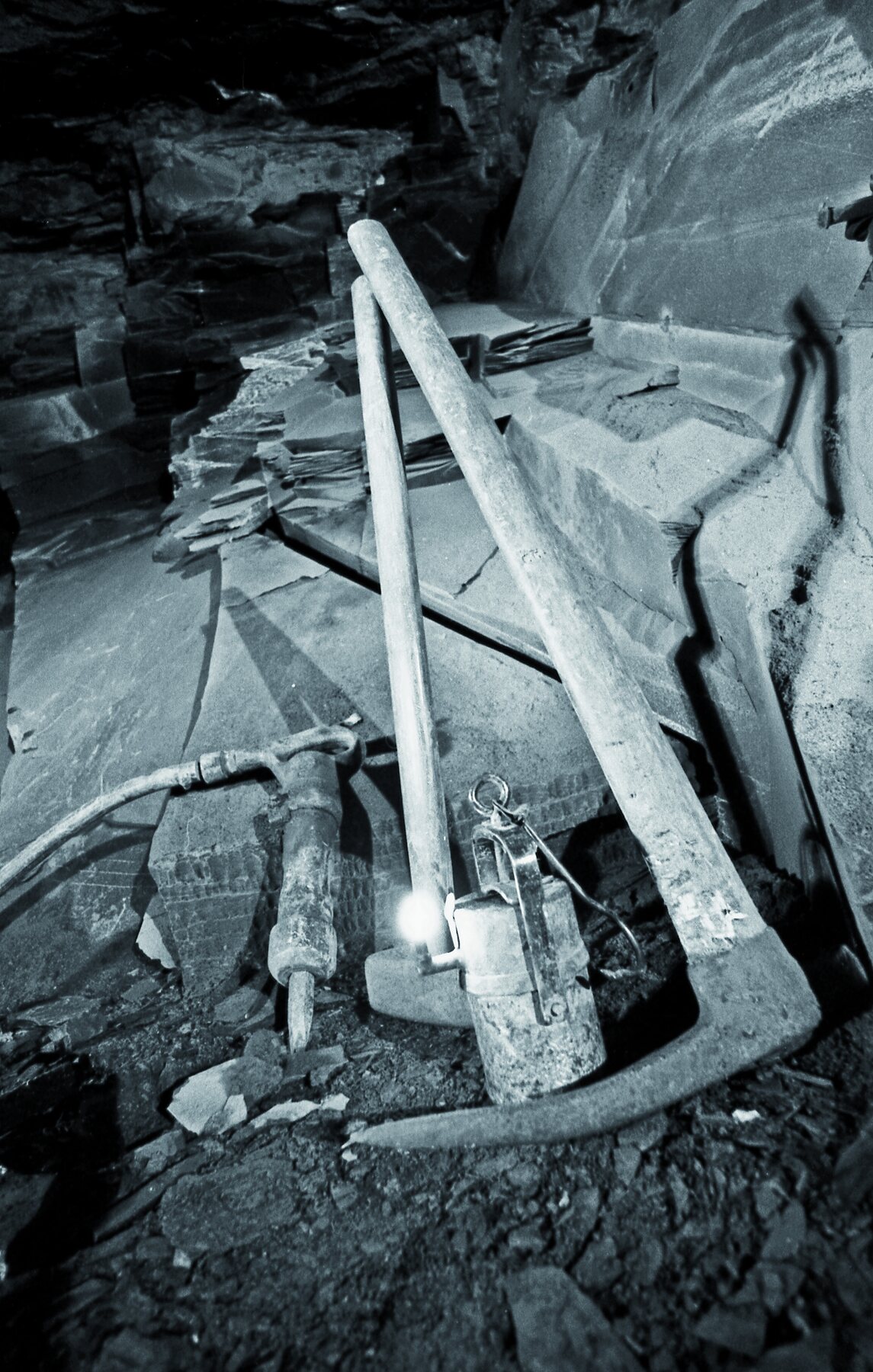
Simple tools, light in the darkness and experience passed down through generations — the everyday equipment of the people who created the labyrinth.
THE CRAFT CONTINUED ABOVE GROUND
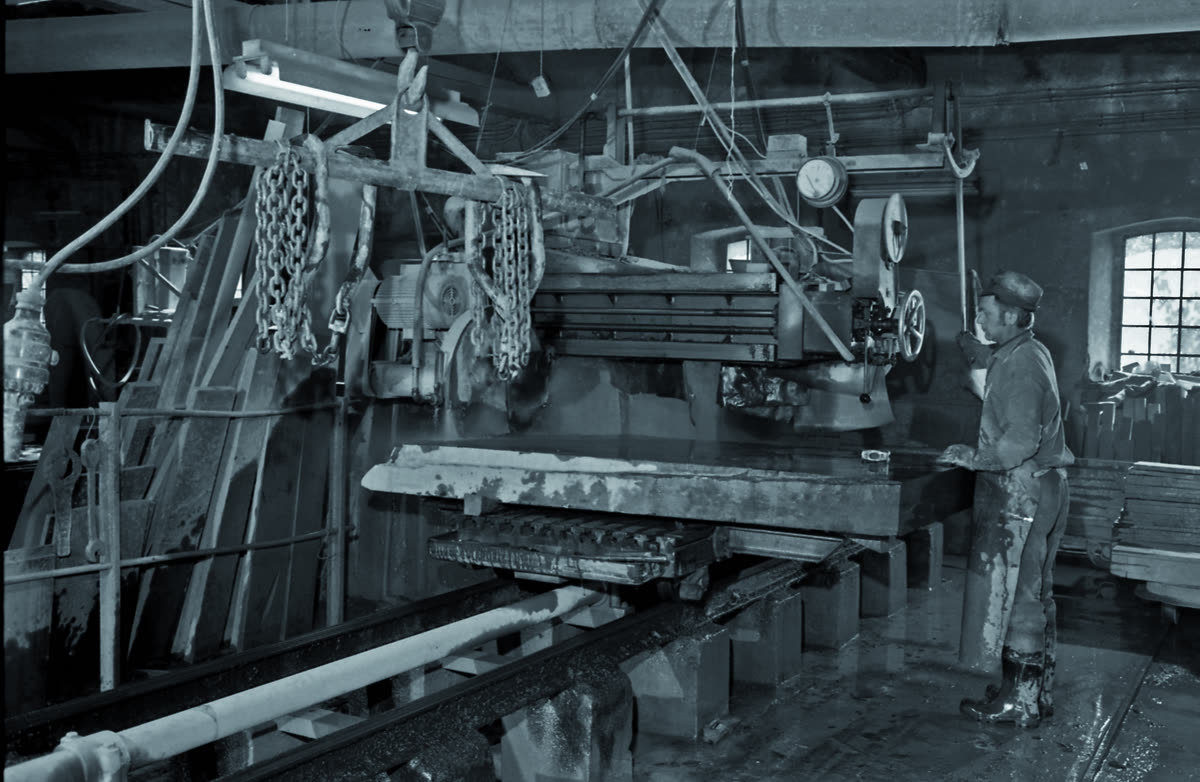
The extracted rock was not yet a finished product. Each slab had to be split, trimmed and worked. Archive photographs show the people and machines that gave the slate its final form.
12 / SHADOWS OF WAR
FORCED LABOUR IN NUTTLAR
This chapter, too,
belongs to Nuttlar.
The Second World War brought one of the darkest chapters in Nuttlar's history. While soldiers died on Europe's battlefields, mining continued. The German war economy needed labour, and people deported from the Soviet Union were assigned to work in the mine.
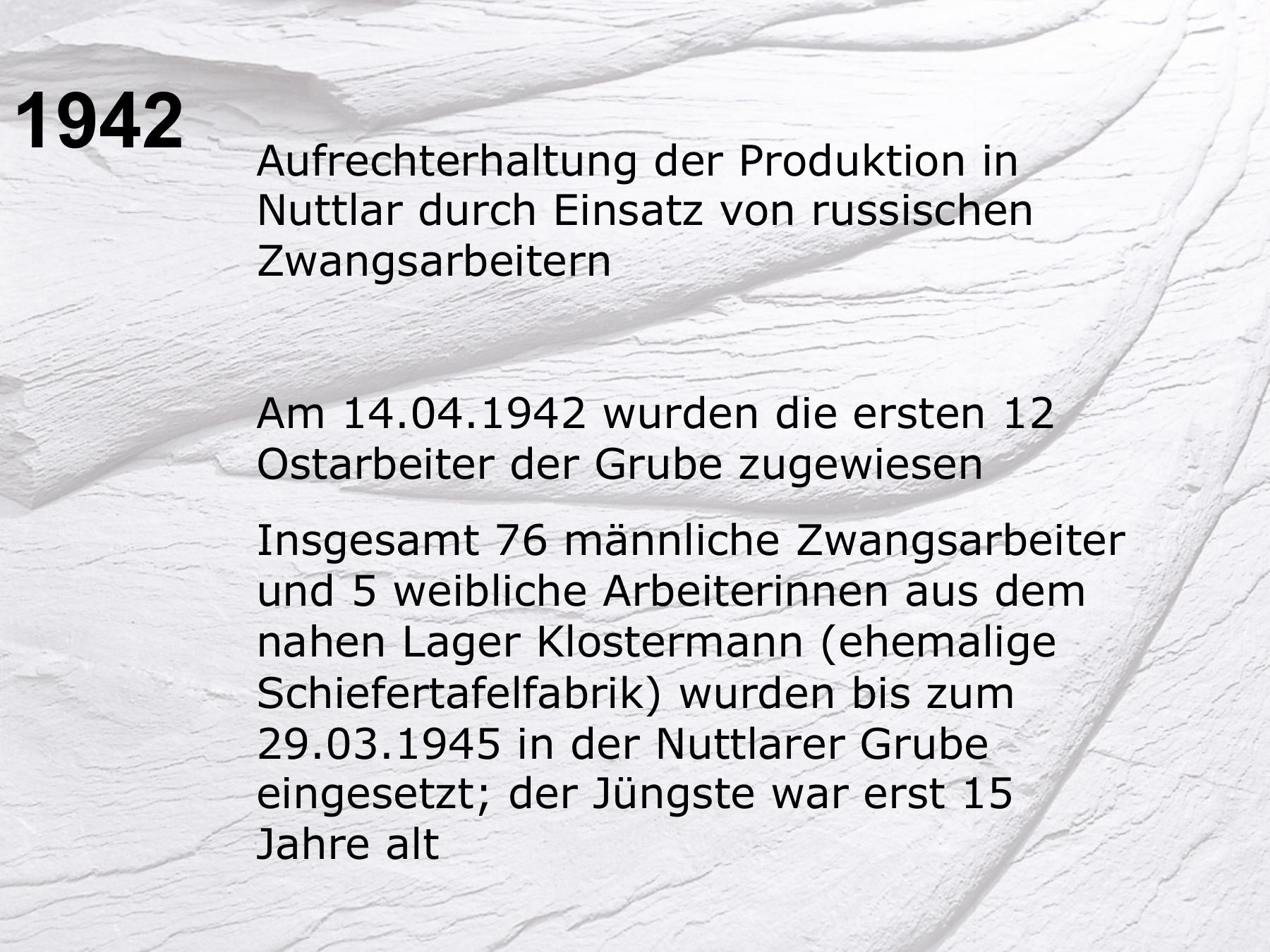
The first twelve forced labourers arrived on 14 April 1942. Surviving records show that a total of 76 men and five women worked here until 29 March 1945. They were housed in the nearby Klostermann camp, established in a former slate-board factory. The youngest was only fifteen years old.
Behind these numbers were people far from home who had not chosen to work in the mine and could not decide freely. We know little about their individual lives today. The surviving records remind us that Nuttlar's wartime history was not only a history of mining and industry.
This history also belongs to Nuttlar. And it deserves not to be forgotten.
13 / EXPEDITION FILM
Nuttlar
in motion.
2026 · CAVE DIVING ADVENTURE TRUST THE LINE · BERGWERK NUTTLAR
14 / WHEN THE MINERS' LAMPS WENT OUT
After the dive,
we return to the surface.
When mining ended in 1984, a long chapter of local history came to a close. The last miners left the underground workings, and water gradually began to flood their workplaces. Today, divers return to some of these places.
For a brief moment, our lights illuminate passages that once belonged to other people. We pass stone walls, rails and traces of work whose significance reached far beyond the mine itself.
For us, Nuttlar is an extraordinary place where technical diving meets history. For generations of miners, however, it meant daily work, a livelihood and sometimes an involuntary fate.
They left an entire underground world behind.
And we came to listen to its echoes.
DID YOU ENJOY THIS STORY?
With one click, you can support more stories from our expeditions.SOURCES
Historical information is based on materials from Schieferbau Nuttlar and the document Schieferbau 1985, regional mining-history sources and information from Bergwerktauchen Nuttlar, the operator of the dive site. The diving section is based on the Special Scuba Division team's own experience and observations.
Historical photographs and documents: Schieferbau Nuttlar Archive, published with the permission of Rainer Mengelers.
Schieferbau Nuttlar · mine history ↗Bergwerktauchen Nuttlar · diving and site information ↗Bergwerktauchen Nuttlar · maps ↗