At one hundred metres, time stands between us and the way back.
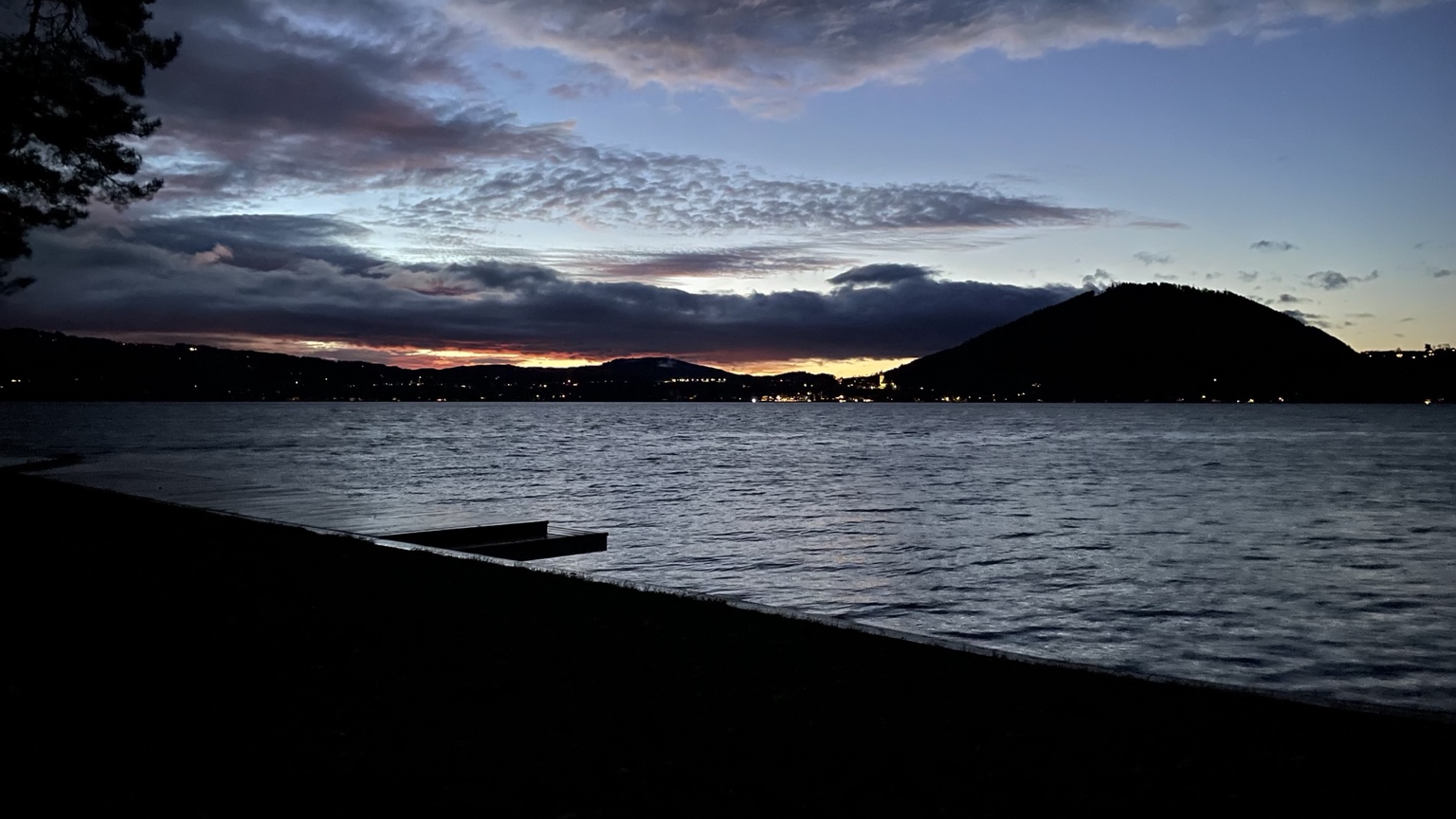
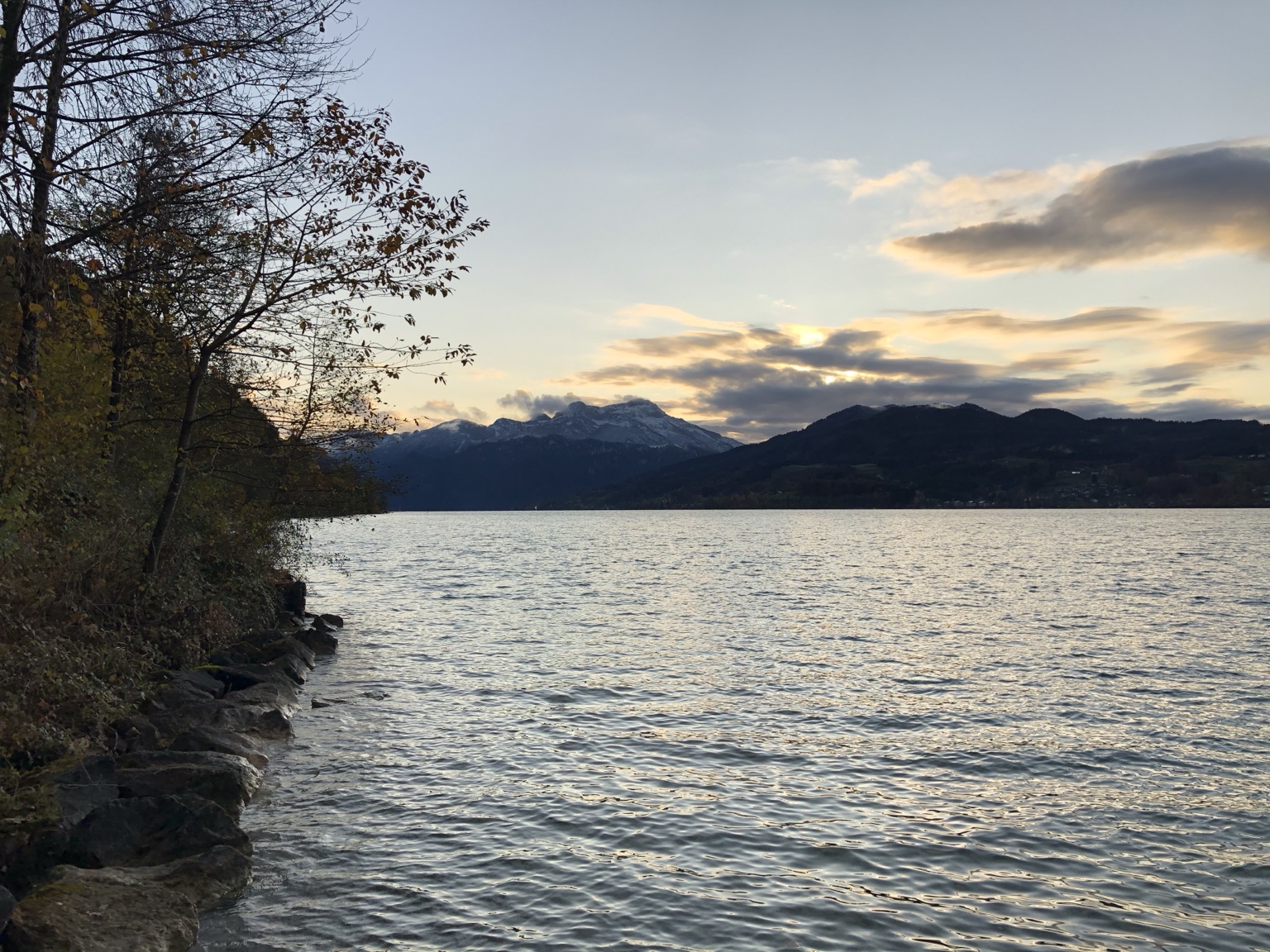
Attersee is calm at the surface. One hundred metres below, the same lake feels completely different. The light disappears, our lamps show only the space in front of us, and every metre makes the way back longer.
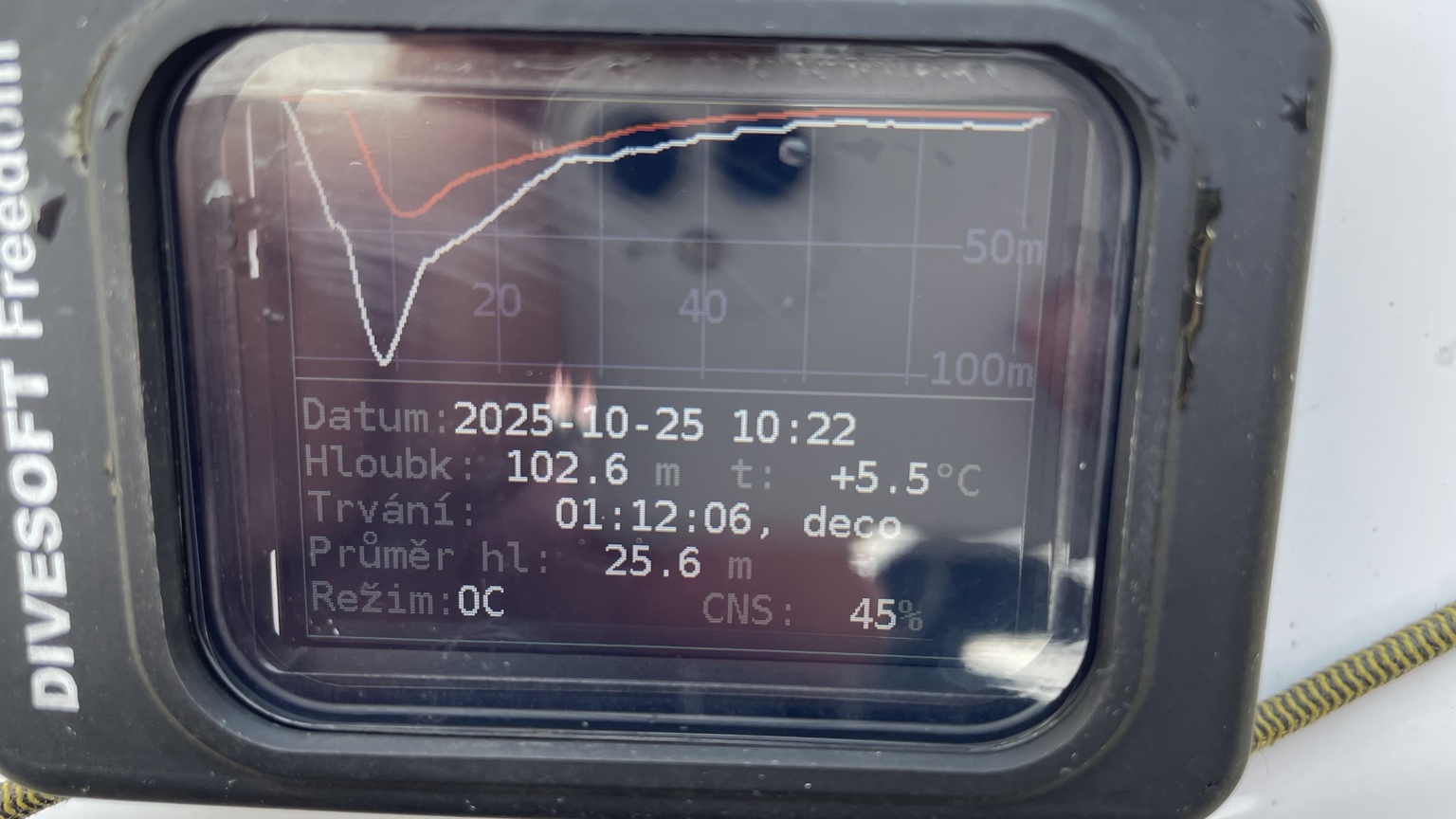
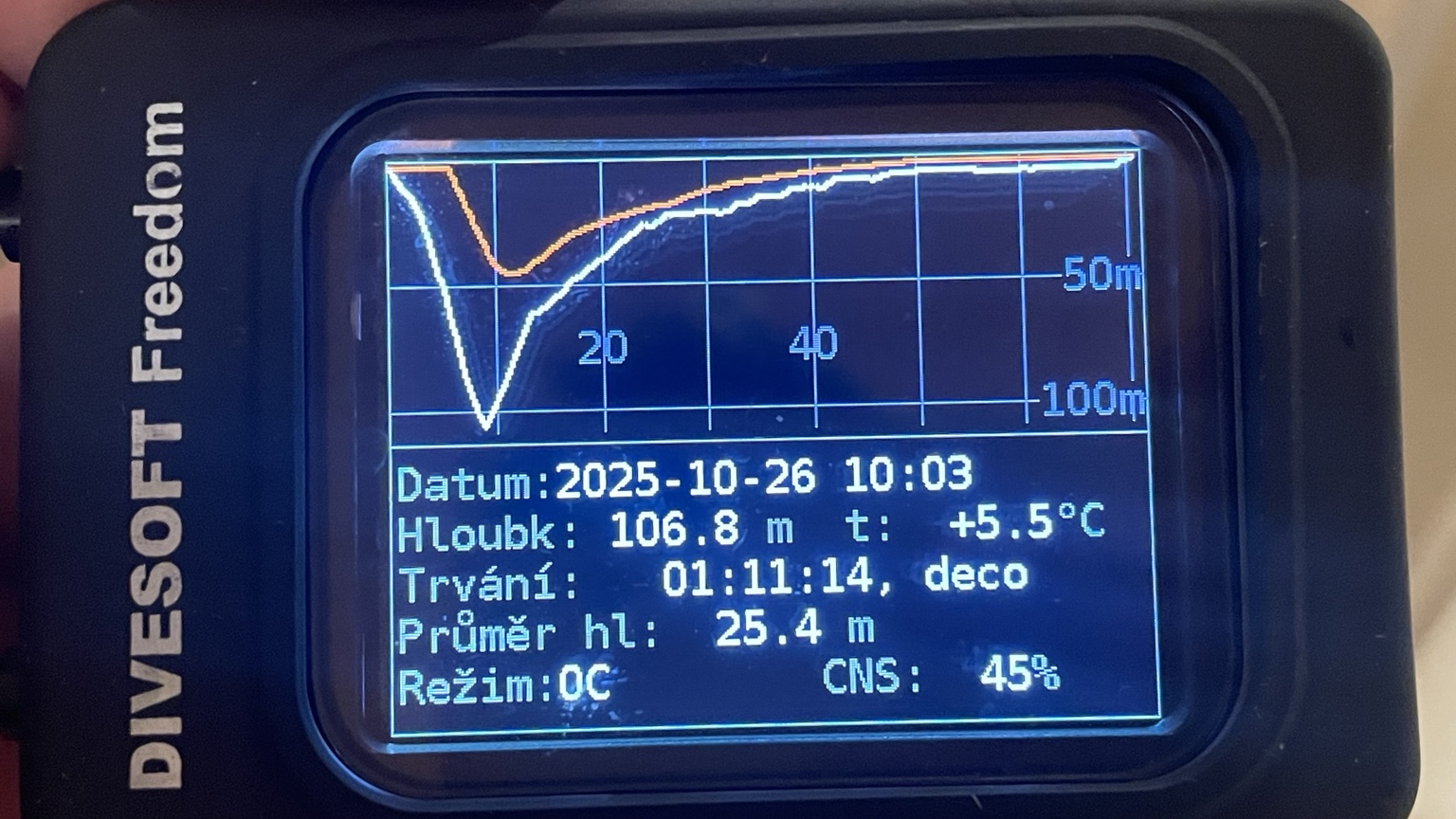
During one weekend, we descend beyond 100 metres twice. The first dive reaches 102.6 metres, the second 106.8 metres. But this story is not about the numbers. A dive like this begins long before we enter the water, and it does not end when we leave the maximum depth.
CYLINDERS THE WORLD HAD NEVER SEEN
02 / THE PLAN
The dive started on paper.
We calculated the profile in separate phases and minutes. We selected a gas for the descent, a bottom gas and gases for decompression. For each one, we defined when to use it, the expected consumption and a safe reserve.
We also invited Mr Failure 🙂 into the plan. A delay at depth, lost gas, higher consumption, an equipment problem or the need to help a buddy. Each of us therefore carried enough gas not only for himself, but also for his buddy’s safe return.
03 / LOGISTICS
THE DIVE DOES NOT END AT THE SHORE
Plan the entry. Plan the return.
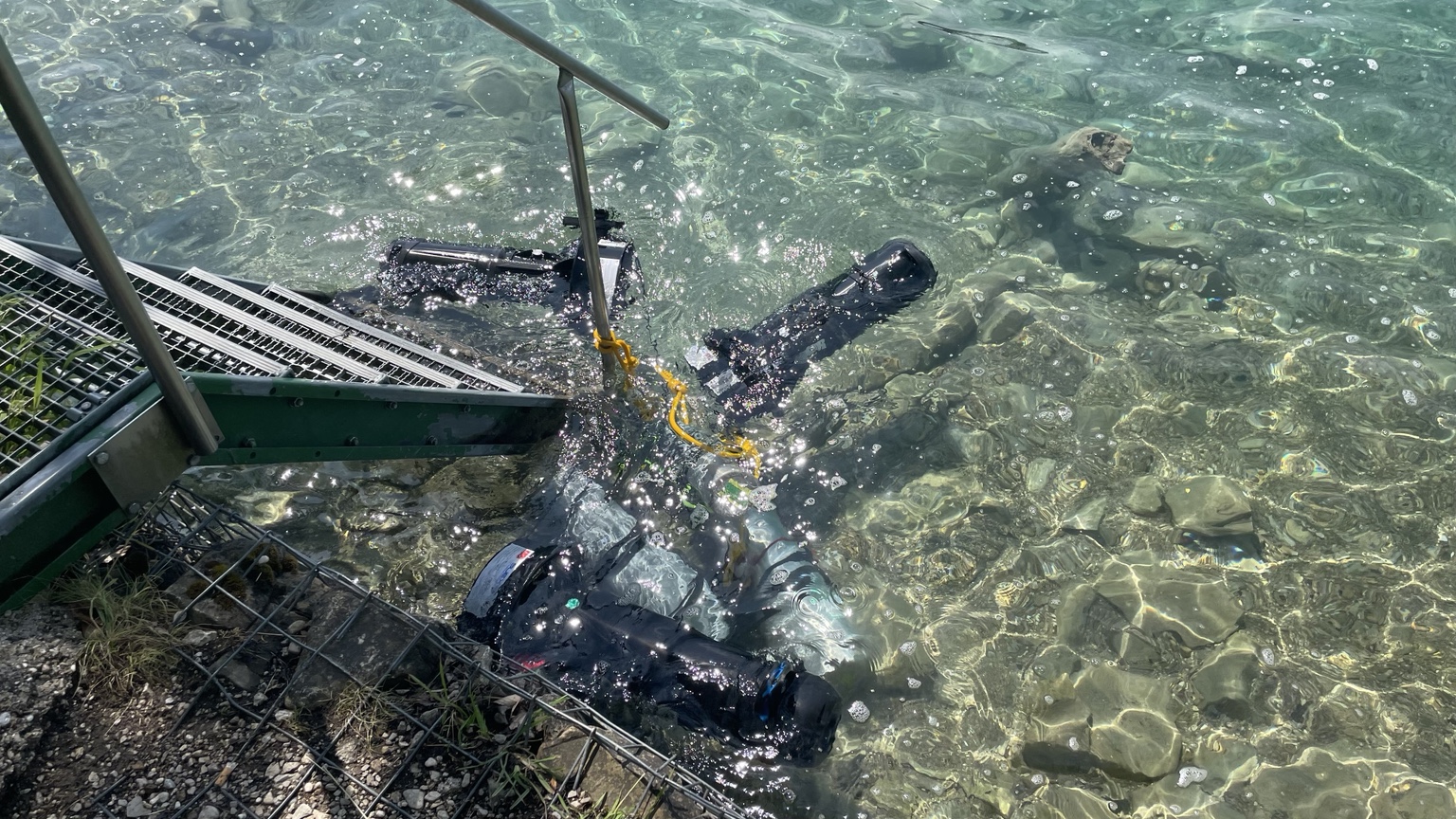
We did not plan only the profile under water. The location, access to the shore, safe entry and the way out after a long decompression were also important.
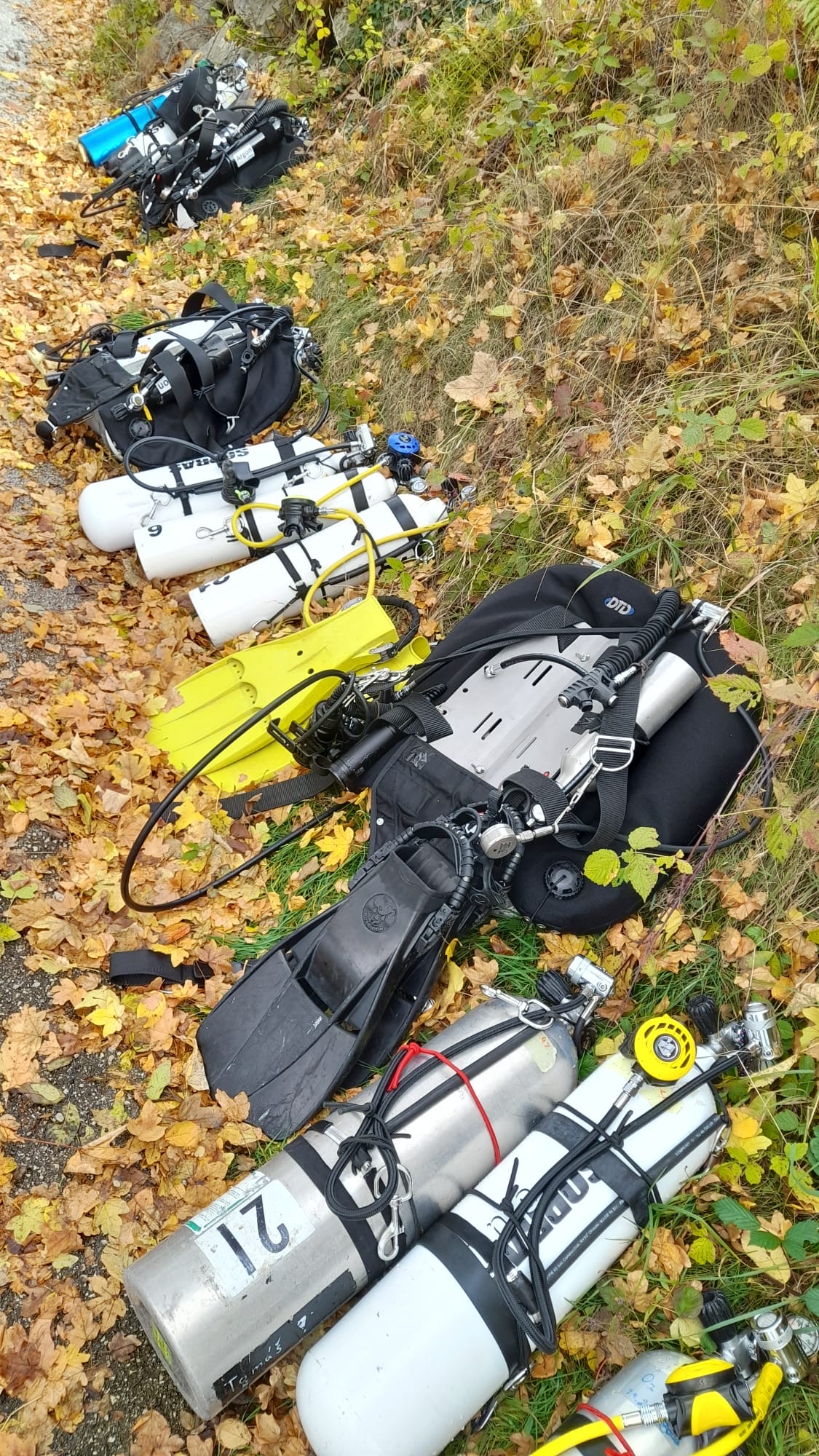
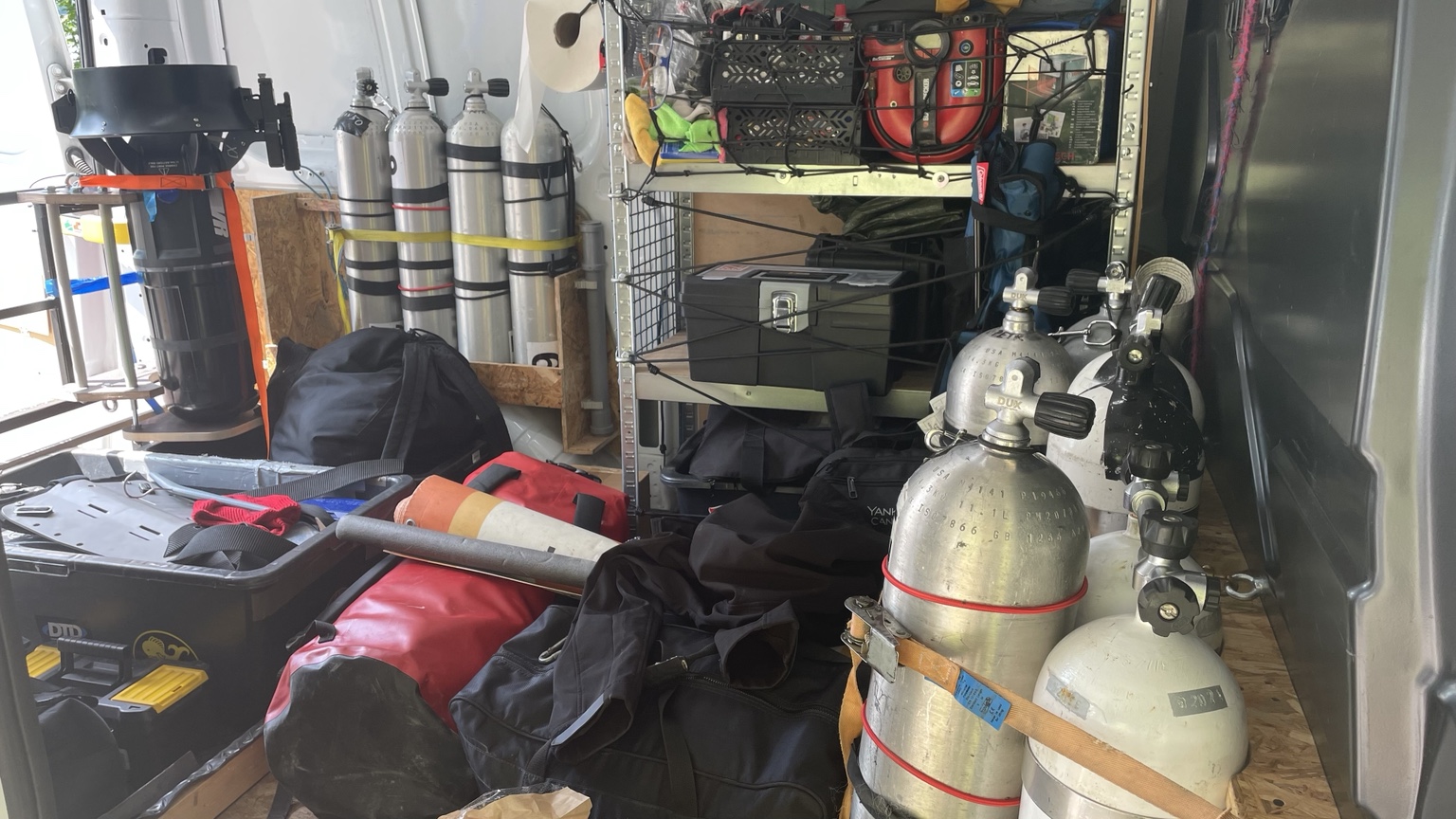
A lot of equipment waits on the shore: back-mounted doubles, travel gas, decompression gases, a reel and backup equipment. Every item has a purpose and a fixed place.
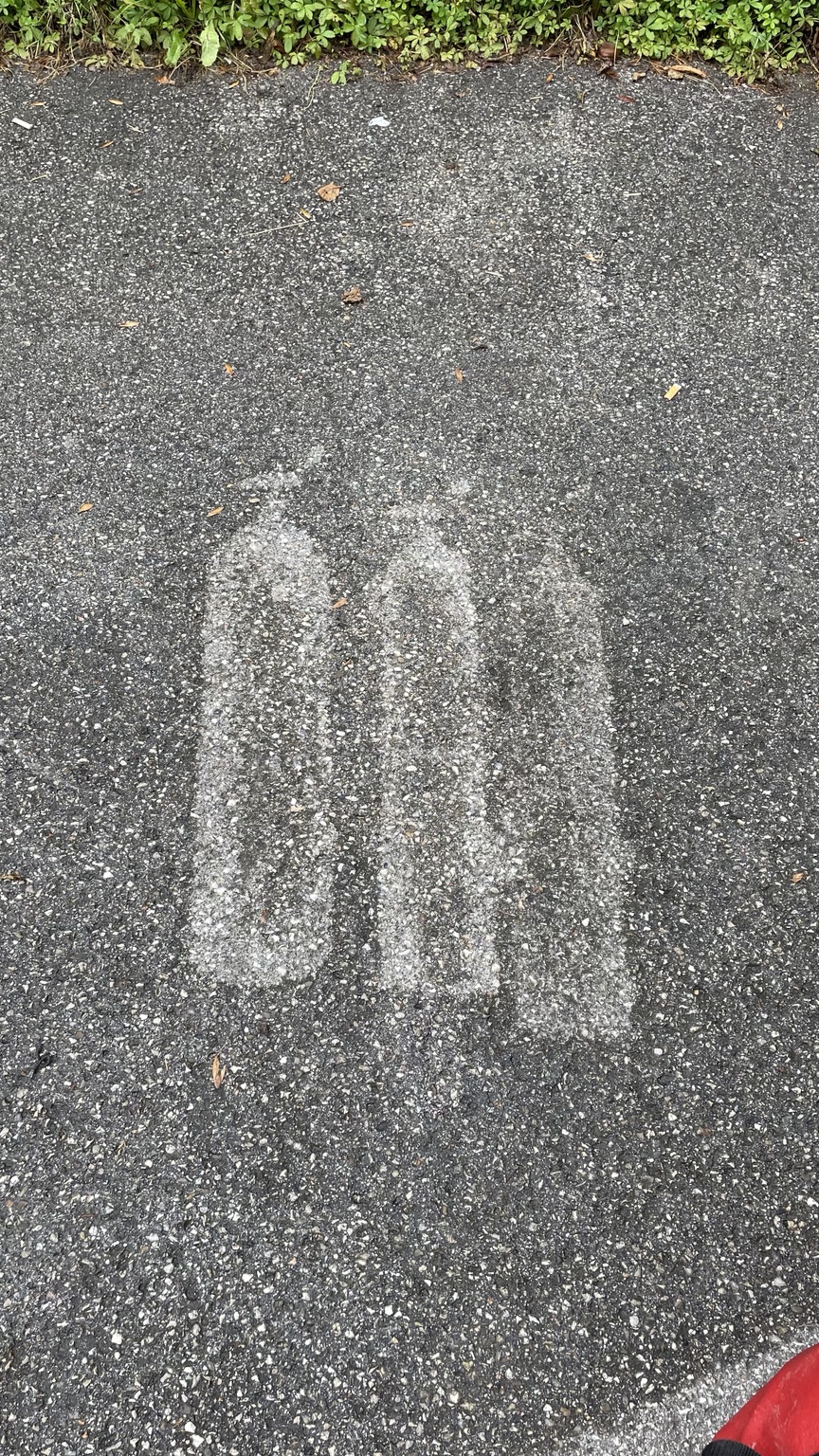
A GAS FOR EVERY PART OF THE JOURNEYEQUIPMENT STORED IN THE CAR
04 / DESCENT
THE LAST CHECK AT THE SURFACE
Down into the depth.
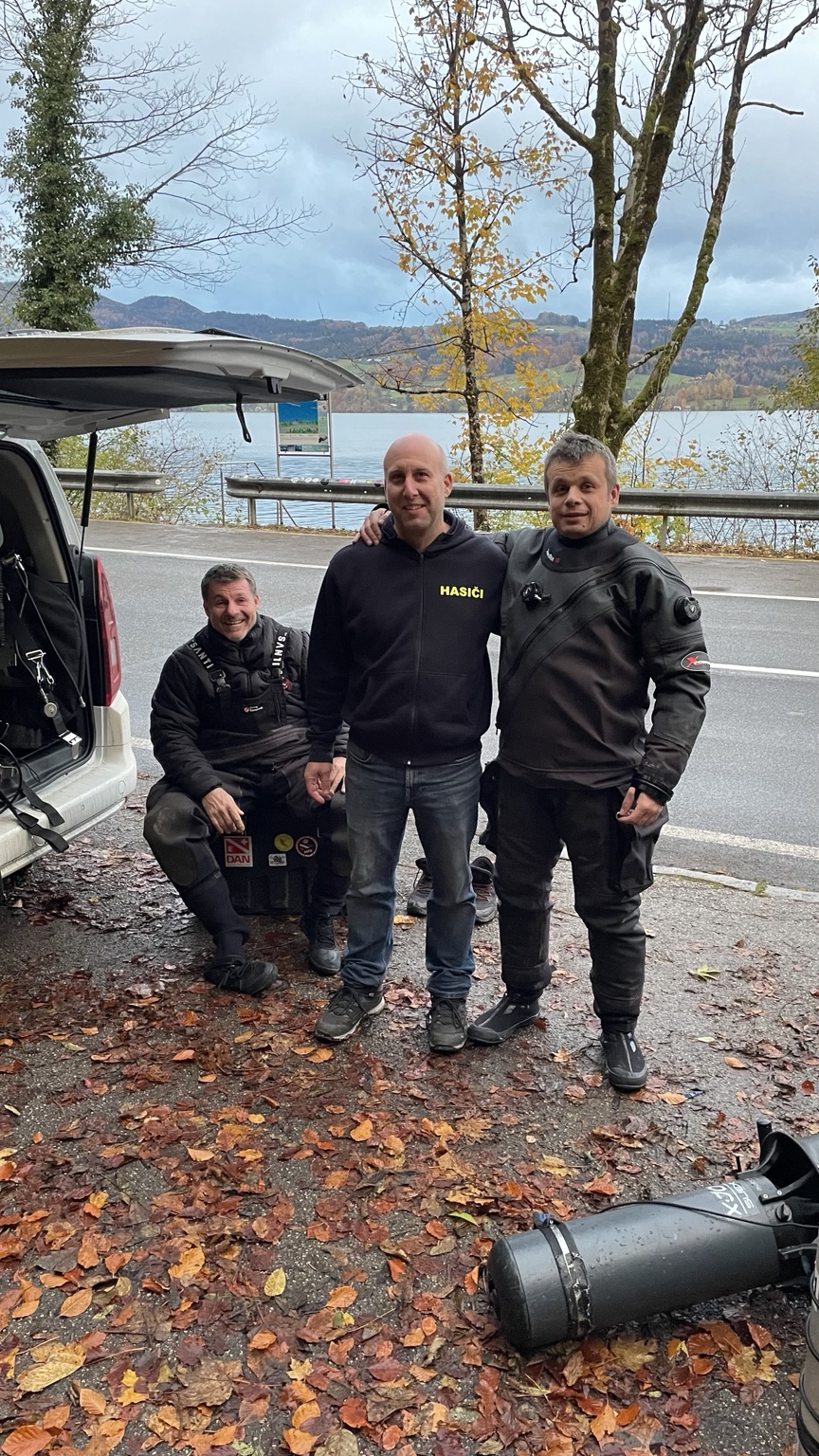
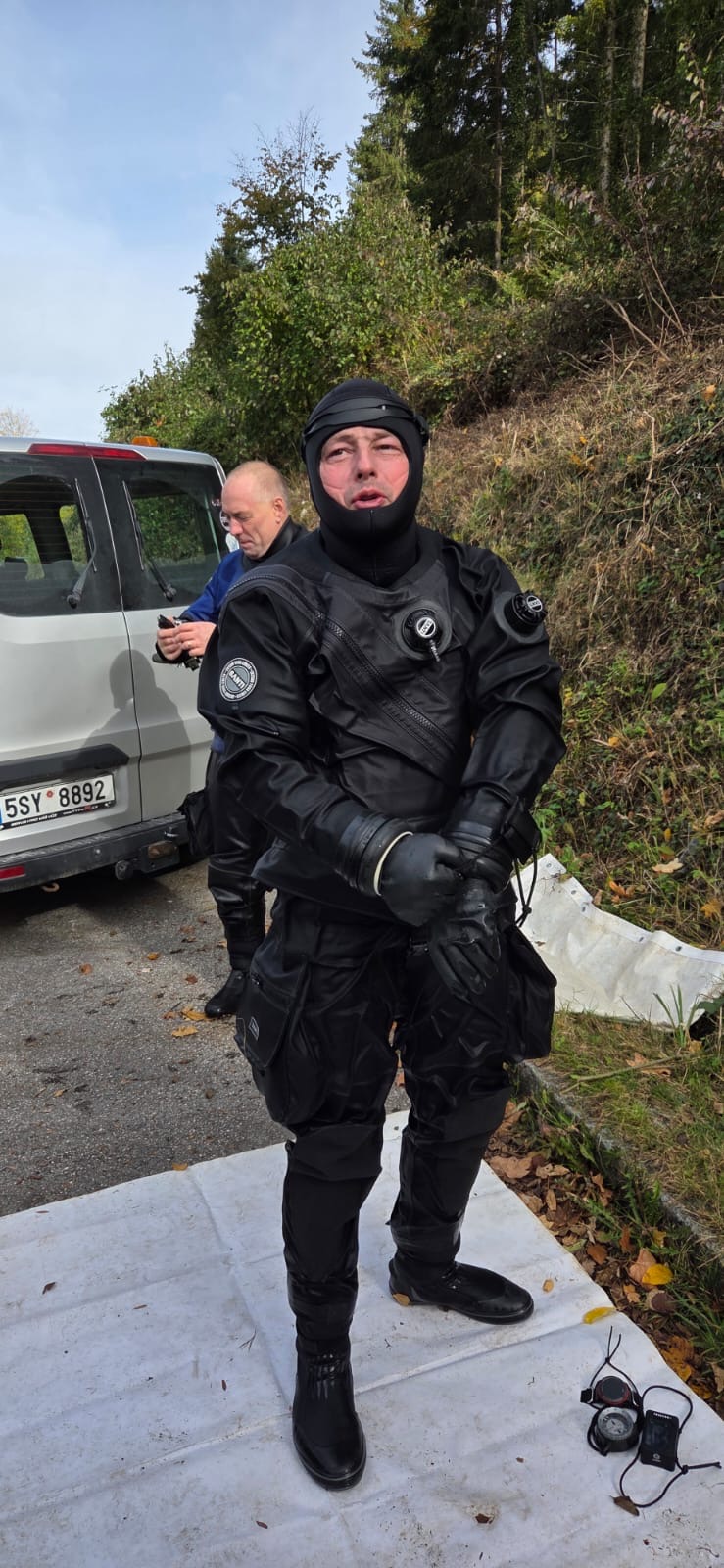
The buddy check is not a formality. We check valves, regulators, cylinder pressures, the position of every gas and the equipment we may need to solve a problem. Only when both of us know everything is in place do we start.
We breathe the travel gas from the surface and descend along the wall. It gives us a constant reference. We never make a free-water descent to this depth.
We also carry a reel with enough line. If an emergency forced us to leave the wall, we could send up a buoy and use its line as a vertical reference for a controlled ascent and the decompression stops.
THE TEAM · BEFORE ENTERING THE WATEREQUIPMENT WE CLIP ON IN THE WATER
05 / 60 METRES
GAS SWITCH
The daylight stays above us.
At 60 metres, we switch from travel gas to the bottom mix carried in the doubles on our backs. I carefully stow the travel-gas regulator and keep the stage under my left arm. I will need it again on the way back.
We continue down along the wall. Around 100 metres, no sunlight reaches us. The rock appears only in the beams of our lamps. Everything else is swallowed by darkness.
At a depth of 100 metres, the pressure around us is already eleven bar.
06 / BOTTOM TIME
Every minute has its place.
At maximum depth, I do not judge time by feeling. I watch the stopwatch. I use it for almost every part of the dive: the descent, bottom time, the start of the ascent and every phase of decompression.
We waited a long time to reach this depth. But this is not a place for celebration or an unnecessary delay. Every extra minute at the bottom would later become more time below the decompression ceiling.
A PREPARED PLAN = A PREPARED DIVER = A HAPPY INSTRUCTOR TRAINER
07 / A CEILING WITHOUT ROCK
THE LONGEST PART OF THE DIVE BEGINS
Going up is not the way out.
We leave the maximum depth, but the dive is far from finished. There is no cave roof or steel wreck above our heads. Even so, the direct way to the surface is closed.
An invisible decompression ceiling has formed above us. It is made of time, pressure and inert gases in our bodies. We can move up below it in a controlled way, but we cannot safely cross it.
At 60 metres, we switch back to the travel gas. At 21 metres, we change to EAN50, and at six metres to pure oxygen. We reached maximum depth in only a few minutes. The return to the surface takes most of the dive.
Depth is not only a number on the computer. It is a commitment to complete the whole journey back.
08 / ORGANISATION
Every cylinder has its place.
The stage I am breathing from hangs under my left arm. Full cylinders for the next part of the dive wait at the back on my right side. Cylinders I will no longer need move to the back on my left.
I use a side deck to organise them. My equipment stays clear and I keep the freedom to move, check my buddy and deal with a situation that was not part of the ideal plan.
At great depth, good organisation is not about appearance. It is part of safety.
FIRST DESCENT · 102.6 MSECOND DESCENT · 106.8 M
09 / THE LAST METRES
The dive does not end at the surface.
After finishing the stop at six metres, I make the final ascent very slowly and enjoy the last moments of the dive. At the surface, I breathe oxygen for a few more minutes. There is no hurry.
I clip all the stages to the prepared line and leave the water without their weight. Then I sit down, eat, drink some tea and let my body and mind slowly relax. We are in no hurry. Only after a while do we start to review the dive and enjoy the calm of the moment.
THE EVENING BETWEEN TWO DIVES
10 / BETWEEN TWO HUNDREDS
The decompression plan ends. The evening begins.
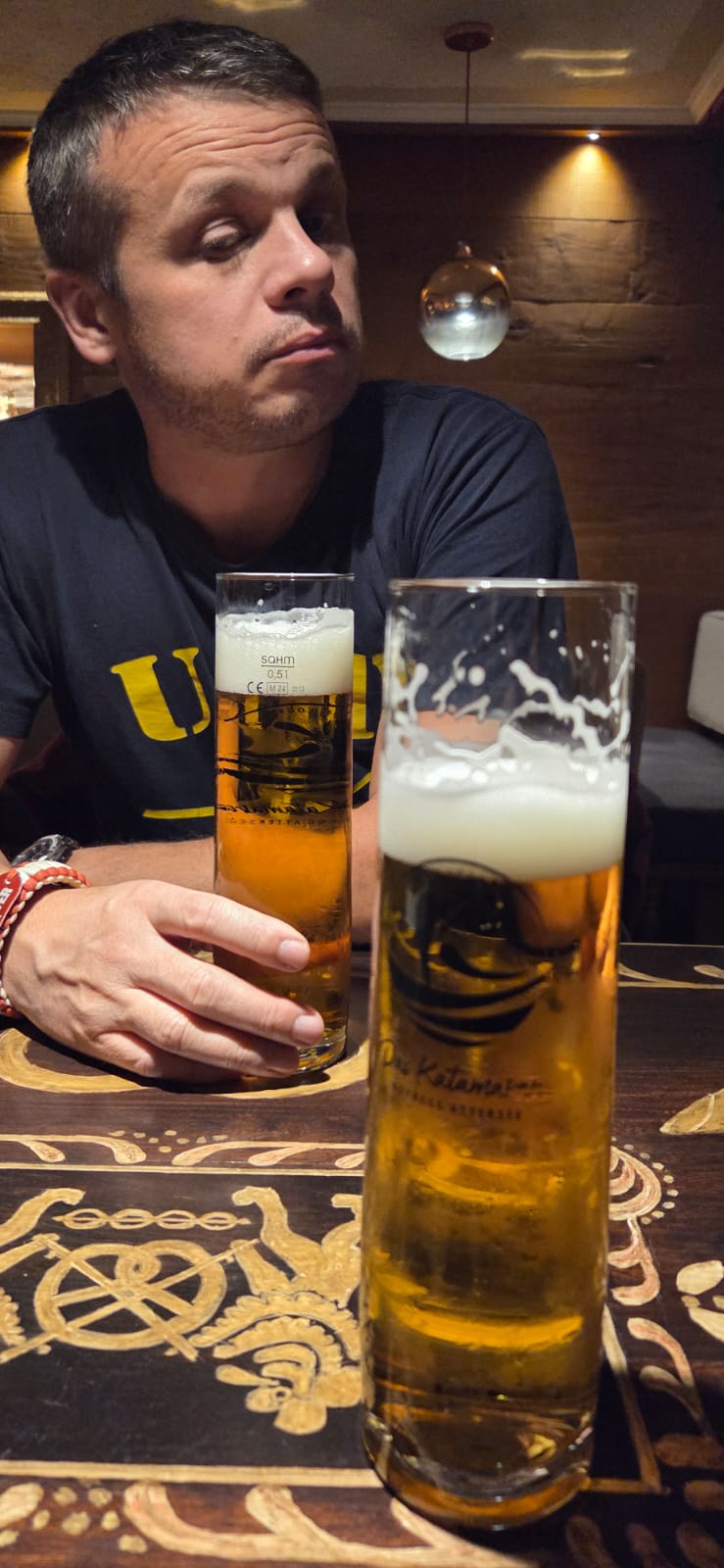
After the dive, it is time to slow down, eat together and have one beer. We talk about work, life and future journeys — and, surprisingly, very little about diving.
One of our unproven theories says that beer helps to release the total load on the central nervous system. Some team members claim that, in our case, there is nothing left to damage anyway.
The theory therefore remains scientifically unconfirmed.
The evening cannot continue for too long. We go to bed early because we need clear heads in the morning.
Another hundred is waiting.
11 / WHAT REMAINS
It was not about the number. It was about the return.
Two dives. Two journeys beyond 100 metres. And the same goal each time: to return together, according to the plan and with enough reserve.
The computers keep the numbers 102.6 and 106.8. We take away something more important. Depth alone proves nothing. It only has meaning together with preparation, discipline, trust in the team and a safe return.
DID YOU ENJOY THIS STORY?
With one click, you can support more stories from our expeditions.OCHRANA SOUKROMÍ
Pro měření návštěvnosti a technického výkonu používáme Cloudflare Web Analytics. Podle společnosti Cloudflare tento nástroj neukládá cookies, nesleduje jednotlivé návštěvníky napříč weby a poskytuje nám pouze souhrnné statistiky o návštěvnosti, používaném zařízení a výkonu webu.